7 Things Nobody Tells You Before Your First Snorkeling Trip
Quick Answer: Most first-timers are surprised by mask fit issues, breathing rhythm through a tube, and how tiring treading water can be — testing gear in a pool beforehand solves nearly all of it.
The brochure photos show effortless gliding over coral. Your first ten minutes will probably look nothing like that, and that’s completely normal.
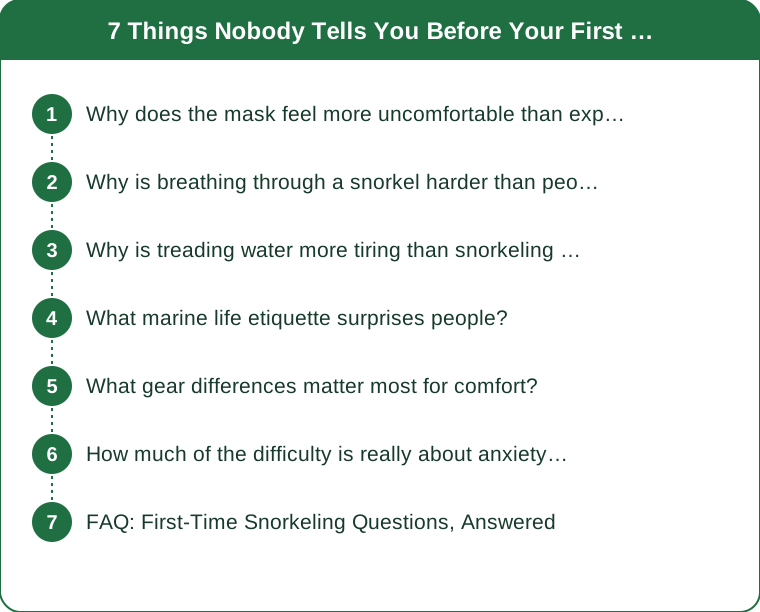
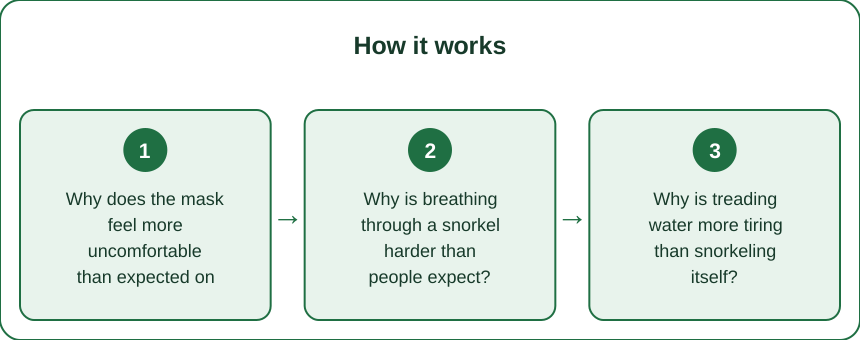
Why does the mask feel more uncomfortable than expected on the first try?
The seal takes practice to get right
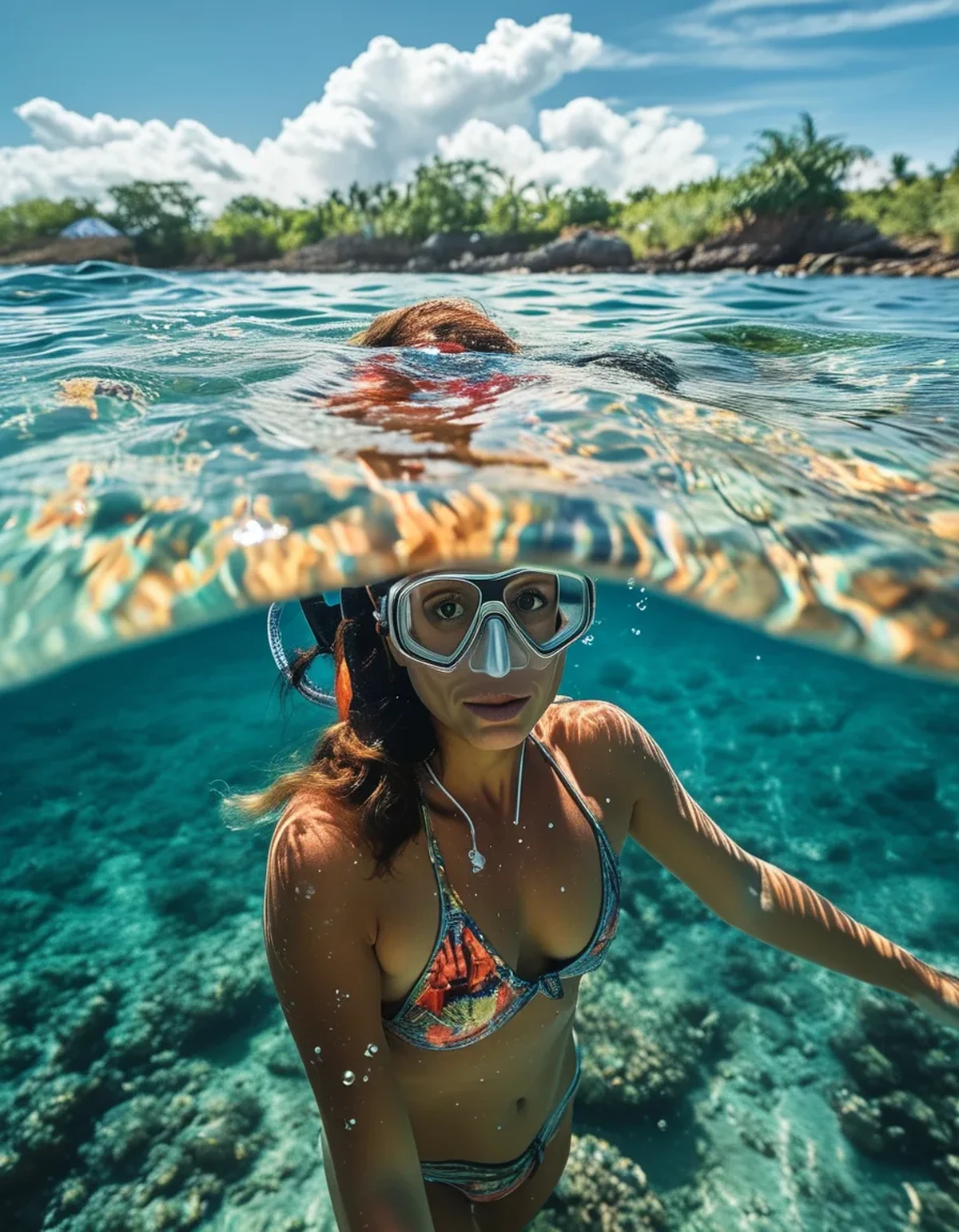
A properly sealed mask should feel snug without needing a tight strap — if you’re cranking the strap to stop leaks, the mask shape doesn’t match your face and a different model will serve you better than more tightening ever will.
Facial hair and hairlines break the seal
Even a few days of stubble along the upper lip can break a mask’s seal enough to cause slow leaking, which many first-timers mistake for a defective mask rather than a fit issue.
Why is breathing through a snorkel harder than people expect?
The rhythm feels unnatural at first
Breathing purely through your mouth while your face is submerged takes conscious effort for most beginners during the first session, since it overrides the instinct to breathe through your nose. Practicing in a pool or calm shallow water first lets this become automatic before you’re focused on marine life and current.
Water occasionally gets into the tube
A splash-guard top helps, but everyone gets a small mouthful of water occasionally when starting out — learning to exhale sharply to clear the tube instead of panicking is the single most useful skill for a comfortable first trip.
Why is treading water more tiring than snorkeling itself?
Buoyancy control is a skill, not automatic
Many first-timers spend more energy trying to stay horizontal and afloat than actually looking at marine life, especially before they’ve learned to use fins effectively for propulsion instead of constant leg kicking.
A proper fin kick saves significant energy
A slow, wide fin kick from the hips (not a fast bicycle kick from the knees) covers more distance for less effort, and learning this in the first 15 minutes changes the entire experience from exhausting to relaxing.
What marine life etiquette surprises people?
Keeping distance matters more than getting close
Many first-timers try to closely approach fish or coral for photos, not realizing that even light fin contact can damage coral that took decades to grow, and that most marine life is more visible if you stay still and let it come to you rather than chasing it.
Sunscreen choice affects the reef
Mineral or reef-safe sunscreen is increasingly required at many snorkeling destinations, since chemical sunscreens have been linked to coral bleaching in high-traffic areas.
What gear differences matter most for comfort?
A dry-top snorkel (with a valve that closes if submerged) prevents water entry far better than a basic tube, which matters a lot for anxious first-timers. Similarly, full-foot fins are easier for beginners than open-heel fins with booties, since there’s one less fitting step to get wrong before you’re even in the water.
How much of the difficulty is really about anxiety versus skill?
A significant portion — the sensation of breathing through a tube with your face submerged triggers a mild anxiety response in many first-timers regardless of physical fitness. Practicing in shallow, calm water where you can stand up at any time removes most of that anxiety within the first 10-15 minutes, after which the actual physical skill comes quickly.
FAQ: First-Time Snorkeling Questions, Answered
Do I need to be a strong swimmer to snorkel?
Basic comfort in water helps, but a well-fitted life vest or snorkel vest lets even non-strong swimmers snorkel safely in calm conditions.
How long does it take to feel comfortable snorkeling?
Most people feel noticeably more at ease after 15-20 minutes of practice in calm, shallow water before heading to open water.
Is it normal to feel a little panicked the first few times?
Yes, this is extremely common and doesn’t mean you’re not cut out for it — a slower pace and shallow-water practice resolves it for the vast majority of first-timers.
TL;DR:
- Mask leaks are almost always a fit issue, not a defect
- Breathing rhythm and fin technique both take a short practice period
- Treading water is more tiring than swimming with proper fin technique
- Keep distance from marine life and use reef-safe sunscreen
- A little anxiety at first is completely normal and fades fast
Your first ten minutes snorkeling are the hardest part — nearly everyone who pushes through them ends up loving it.
Keep Reading
This article is for general informational and styling purposes only. Fit, sizing, and product availability may vary.