The Complete Guide to Snorkelling After a Long Break
Quick Answer: Your technique memory survives a break far better than your comfort, your gear and your fitness do. Expect breathing rhythm and mask clearing to come back within minutes, and expect three things to have changed: your gear has degraded in storage even if it looks fine, your breath-hold and swim fitness have declined more than you think, and your cold tolerance is completely uncalibrated if you are returning in a different season. Plan your first session back around checking those three, not around covering distance.
Returning snorkellers get into trouble in a specific and predictable way.
They trust the memory of what they could do, and the memory is of their best day.
What actually comes back quickly, and what does not?
Worth separating clearly, because it determines what your first session should look like.
Comes back fast — usually within the first ten minutes:
Breathing rhythm through a snorkel. This is deeply motor-learned and it returns almost immediately. Most returners report the first two minutes feeling strange and the third feeling normal.
Mask clearing and snorkel clearing. The physical actions are simple and well retained, even after years. You may be slower and less tidy, but you will not have forgotten how.
Fin kick. The pattern persists. Efficiency does not — see below.
Basic water comfort, if you were genuinely comfortable before. Comfort built over many sessions is fairly durable.
Does not come back fast — this is where the gap lives:
Swim fitness. Cardiovascular fitness declines measurably within weeks of stopping and substantially over months. Whatever distance you used to cover comfortably, you should assume you cannot currently.
Breath-hold capacity and comfort. If you used to duck-dive, this is the single most degraded ability and the one most likely to get someone into trouble. Breath-hold is highly trainable and it detrains just as readily.
Efficiency. Your kick will be less economical, your body position slightly worse, and your drag higher. You will burn energy faster at the same speed.
Cold tolerance. Entirely dependent on recent exposure. A year away means you are starting from nothing.
Ear equalisation comfort, if you dive down. It is a skill as much as an anatomy question and it gets rusty.
The practical upshot: your skills are largely intact and your capacity is not. Plan for the capacity.
What has your gear done while it sat in a cupboard?
More than it looks like, and this is where most returning sessions go wrong before anyone gets wet.
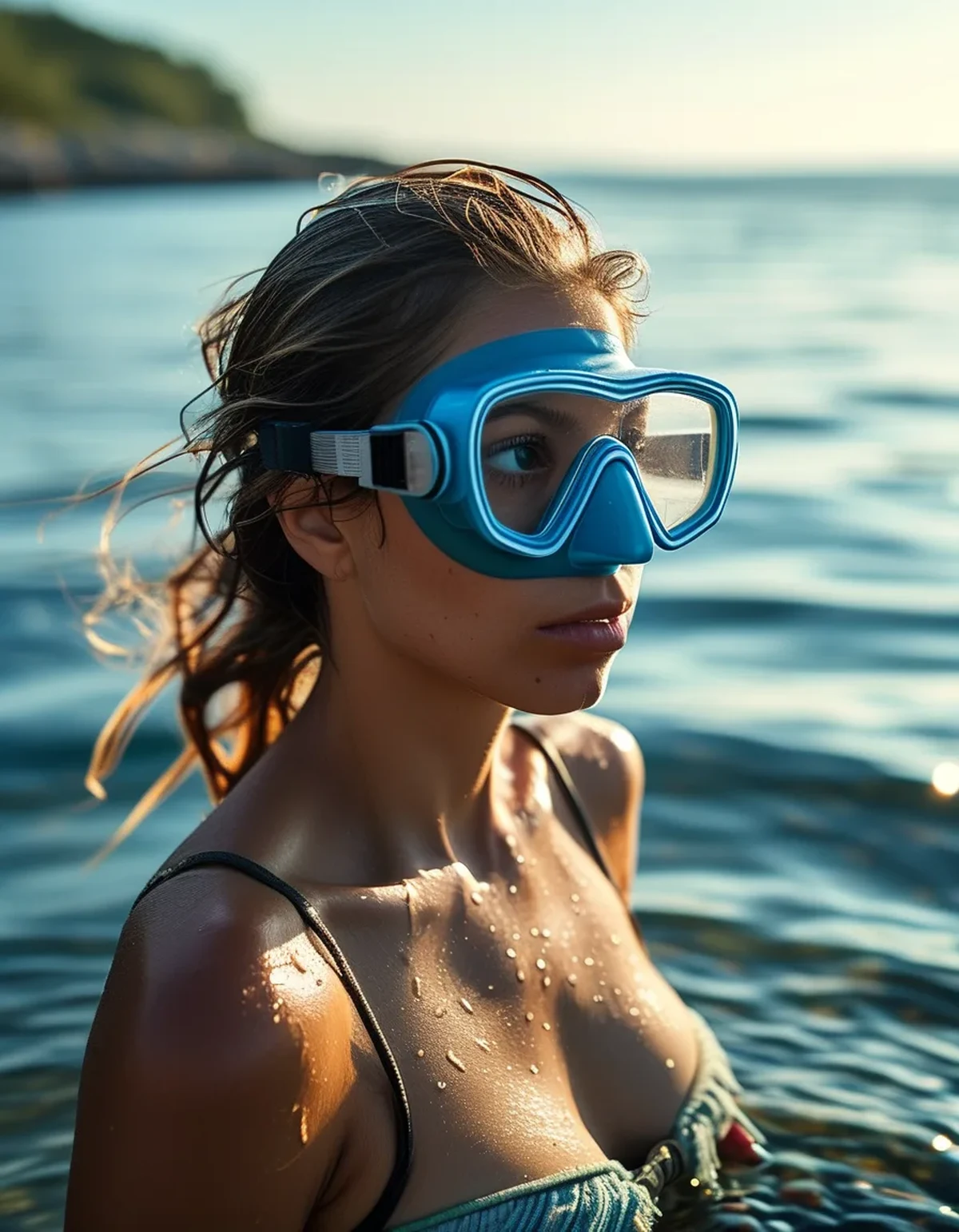
Mask skirt. Silicone degrades slowly and unevenly, and it degrades faster if it was stored in heat, in sunlight, or compressed against something. A skirt that has hardened or taken a set will not seal reliably no matter how well the mask fitted originally. Check by pressing the mask to your face without the strap and inhaling gently through your nose — if it does not hold, the seal is gone.
Mask strap. The most common outright failure. Rubber straps perish and split, usually at the buckle, and usually at the least convenient moment. If your strap is the original rubber and it has been stored for years, replace it rather than testing it in the water. A fabric strap replacement costs very little and lasts far longer.
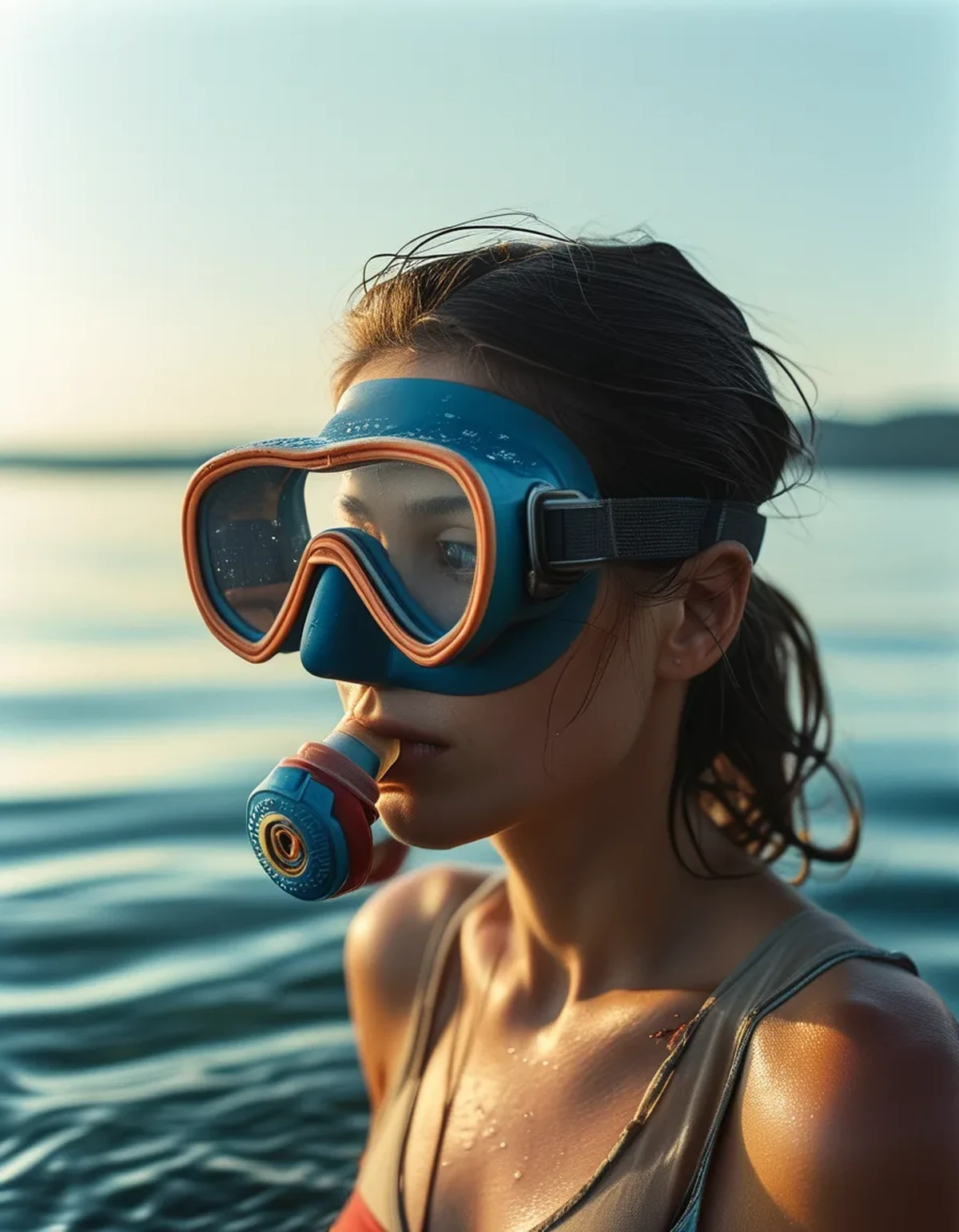
Snorkel purge valve and mouthpiece. Silicone mouthpieces harden and can crack; purge valves stick, perish, or get stiff enough that they no longer seal. A stuck purge valve means water that will not clear, which is precisely the thing that panics people.
Fin foot pockets and straps. Rubber straps on open-heel fins are the same failure mode as mask straps. Full-foot pockets can crack at the flex point.
Anti-fog residue and old salt. A mask stored without a proper freshwater rinse has salt crystals in the skirt channel and possibly a film on the lens. New masks also come with a manufacturing film that needs removing — if this mask was never properly prepared, it will fog no matter what you spray on it.
Wetsuit, if you use one. Neoprene compresses permanently with age and loses insulation. A ten-year-old suit is meaningfully less warm than it was, which combines badly with uncalibrated cold tolerance.
The practical rule: check every piece of gear in a bath or a pool before you take it to open water. Twenty minutes at home prevents the most common bad first session.
How should you structure the first session back?
Deliberately small, and structured around verification rather than enjoyment. The enjoyment comes in session two.
Choose the easiest conditions available. Sheltered, shallow, entry you can stand up in, no current, good visibility, and somewhere with other people around. Every one of those is a variable you are removing so you can assess the others.
Go with someone. Not negotiable after a long break, and particularly if you intend to duck-dive at all. The buddy principle exists precisely for the situation where something you were confident about turns out to have degraded.
Spend the first ten minutes in water shallow enough to stand. Fit the mask, breathe through the snorkel, clear the mask deliberately twice, clear the snorkel deliberately twice. Confirm the gear rather than assuming it.
Then swim a short, defined loop parallel to shore. Not out and back. Parallel means you are never far from your exit and you are never committing to a return leg you might not have the energy for.
Keep it to 20 to 30 minutes. This will feel absurdly conservative and it is the correct length. You are gathering information about your current fitness, and the way to gather it safely is to stop before you find the limit.
No duck-diving on the first session. If breath-holding is part of what you enjoy, reintroduce it on session two or three, in shallow water, with a buddy watching, and with far more conservative limits than you remember.
Note what surprised you afterwards. Almost everyone finds one specific thing was worse than expected. Knowing which one shapes the next few sessions.
What changes if you are returning in a different season?
A great deal, and this is the most underestimated factor for anyone coming back in autumn.
Water retains heat far longer than air does, so late-season water can be at or near its warmest of the year while the air has cooled considerably. That combination produces a specific set of issues:
Getting out is the hard part, not getting in. Wet skin in cool air with any wind loses heat rapidly. People plan for the water temperature and are caught by the exit — which is when they are tired, wet and least able to manage it.
Cold shock on entry is a real consideration in cooler water. The initial gasp response to cold water immersion is involuntary and it is genuinely hazardous with a snorkel in your mouth. Enter slowly, get your face in gradually, and do not jump in.
Your thermal tolerance is uncalibrated. Whatever you could handle at the end of last season, you cannot handle now. Acclimatisation to cold is real and it fades.
Sessions should be shorter. Cold accelerates fatigue and impairs decision-making before you notice it. Shivering is a late sign, not an early one.
Practical measures: a wetsuit or at minimum a thermal top even if the water feels fine at first; a warm layer and a hat waiting at your exit point, not in the car; a hot drink; and a firm time limit set before you get in rather than decided while you are cold.
Light is the other seasonal change. Lower sun angles mean less light penetration and worse visibility at the same depth, and the usable window in the day is shorter. Plan to be out well before dusk rather than at it.
Rebuilding breath-hold and fitness safely
Only relevant if you duck-dive, and it is the area where returning snorkellers are most at risk.
The headline safety point first, because it is not optional: never hyperventilate before a breath-hold, and never breath-hold alone. Hyperventilation reduces the carbon dioxide that drives the urge to breathe without increasing oxygen stores meaningfully, which can allow someone to lose consciousness underwater with no warning. This is the mechanism behind shallow water blackout and it kills experienced swimmers, not just beginners. If you learned differently years ago, this is one of the things that has changed.
With that established, a sensible rebuild:
Rebuild surface fitness first. Several sessions of comfortable surface snorkelling before you attempt any depth. Fitness underpins everything and it is the safest thing to train.
Reintroduce dives in shallow water only — depths where you could stand or easily surface. Short, relaxed, well within your comfort.
Assume your previous limits do not apply. Halve whatever you remember and build from there over multiple sessions rather than testing on day one.
Always have a buddy watching you specifically, at the surface, for the whole dive and for at least thirty seconds after you resurface. Blackouts frequently happen on or just after surfacing.
Stop for the day at the first sign of a headache, tingling, or unusual fatigue.
Consider a refresher course. Freediving and snorkelling instruction has improved considerably and a single session with an instructor will correct habits you have carried for years without knowing.
If you have any cardiac, respiratory or ear condition, or you are on medication that affects alertness, get medical advice before returning to breath-hold activity. This is general information, not medical or safety training.
What Nobody Tells Returning Snorkellers
Your mask probably does not fit any more. Faces change over a decade, and so does what is available. Masks have improved substantially — better skirts, better fields of view, better low-volume designs. A mask that was excellent in 2012 is likely to be mediocre now, and this is the one piece of gear genuinely worth replacing.
The fogging you remember was probably preventable. The proper preparation of a new mask — scrubbing the lens interior to remove the manufacturing film — is not widely known and it is the reason so many people’s memory of snorkelling includes constant fogging. If you never did it, do it now, and the difference is dramatic.
You will be more tired than you expect and less than you fear. Twenty minutes will feel like plenty on session one and unremarkable by session four. The recovery of fitness is faster than its loss.
Your enjoyment may have changed. People often return expecting the same experience and find they now prefer shorter, calmer, closer-to-shore sessions. That is not a decline; it is a different set of preferences.
The sites have changed. Reefs, seagrass and marine life shift over years, and somewhere excellent a decade ago may be quite different. Check recent reports rather than relying on memory.
Confidence returns last. This is the part almost nobody warns you about — your skills come back in minutes, your fitness comes back in weeks, and the settled, unthinking comfort in the water takes several sessions to return, which means session one can feel disappointingly tentative even when nothing is actually wrong. Do not read that feeling as a verdict on whether you should have come back.
FAQ: Returning to Snorkelling, Answered
How long is a long break?
Anything over a season changes your fitness and cold tolerance meaningfully. Over a year and you should assume your gear needs checking properly. Over five years and the mask is likely to need replacing regardless of how it looks.
Do I need a refresher course?
Not for surface snorkelling if you were confident before. Strongly worth it if you duck-dive, because breath-hold safety guidance has tightened considerably and a single session will update it.
Should I replace all my gear?
No — prioritise the mask if it is old, the mask strap regardless, and the snorkel mouthpiece if the silicone has hardened. Fins last longest and are usually fine.
Is it safe to go alone if I stay in shallow water?
Surface snorkelling in calm, shallow, supervised water is a reasonable personal risk decision for a confident swimmer. Anything involving breath-holding or open water genuinely warrants a buddy, and after a long break the case for one is stronger than usual.
How quickly will my fitness come back?
Most people find noticeable improvement within three or four sessions and something close to their previous comfortable range within six to eight, provided the sessions are regular. It comes back considerably faster than it built the first time.
What if I have become more anxious in the water?
Common and generally resolves with graded exposure — shallow water, short sessions, a buddy, easy conditions. If it does not settle, a session or two with an instructor is more effective than pushing through it alone.
Is autumn a bad time to return?
Not at all — the water is often at its warmest and the sites are quieter. It requires more planning for the exit, the light and the air temperature than a summer return does, which is a reason to prepare rather than a reason to wait.
TL;DR:
- Skills return in minutes; fitness, breath-hold and cold tolerance do not, so plan around capacity rather than memory
- Check every piece of gear in a bath before open water — straps, purge valves and mask skirts fail in storage
- Make session one a 20 to 30 minute parallel-to-shore loop in the easiest conditions you can find, with a buddy
- Returning in autumn means warm water and cold air, so the exit is the hard part and needs planning
- Never hyperventilate before a breath-hold and never breath-hold alone — this guidance has tightened since many people learned
Before you book anything, take your mask into the bathroom, press it to your face without the strap and breathe in through your nose. If it does not hold itself there, you have just saved your first session back.
Keep Reading
This article is for general informational and styling purposes only. Fit, sizing, and product availability may vary.