Choosing the Right Snorkel Fins: Full-Foot vs Open-Heel, Short vs Long Blade
Quick Answer: For warm-water recreational snorkeling, full-foot fins with a shorter blade are the easiest, most comfortable choice for most people. Open-heel fins with booties make sense if you’re snorkeling in cooler water, entering from rocky shores, or want more propulsion power for longer swims.
Most people buy whatever fin is closest to the mask and snorkel on the rack, treat it as an afterthought, and then wonder why their calves cramp twenty minutes into a swim or why their ankles feel raw after a single session. Fins actually have more decision points than either of the other two pieces of gear, and getting them wrong shows up fast in fatigue and discomfort.
This guide walks through every real decision point — foot pocket style, blade length, blade material, sizing, and how to actually test a pair before committing — so the next fin purchase is based on your actual conditions and swim style instead of whatever happened to be in stock, and so you’re not the person limping off the boat with cramped calves while everyone else is already enjoying the reef.
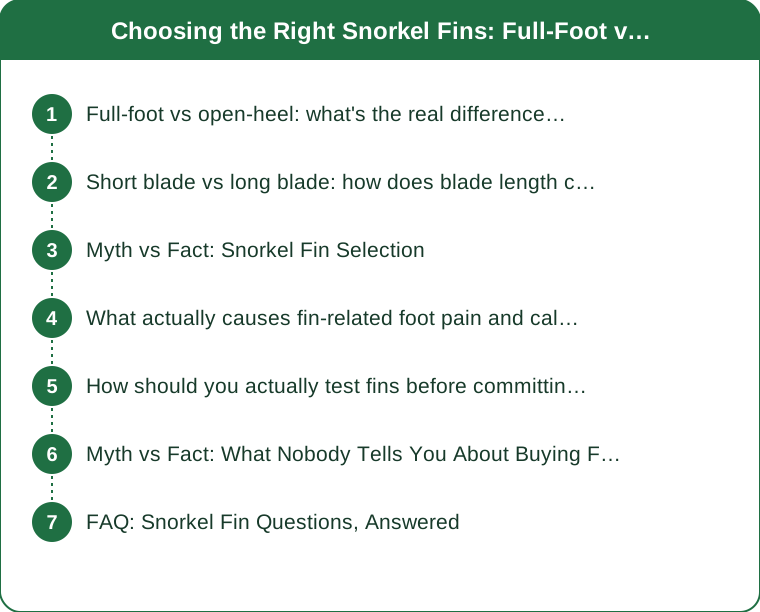
Full-foot vs open-heel: what’s the real difference and who should choose which?
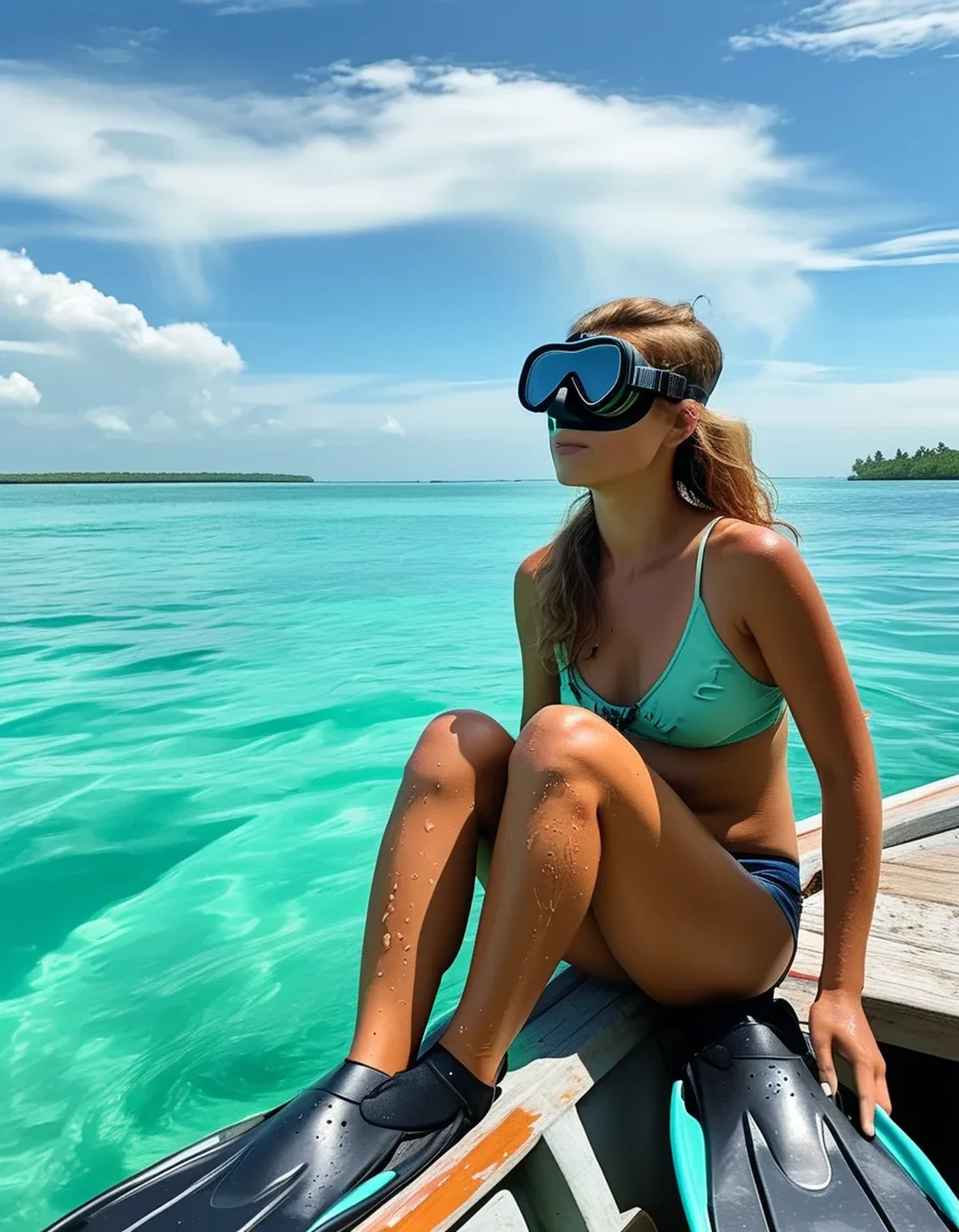
Full-foot fins have an enclosed pocket you slide your bare foot into, like a shoe — no straps, no boots, and they’re generally lighter and less expensive. They work best in warm water where you don’t need thermal protection and where you’re typically entering the water from a boat or a beach rather than a rocky, uneven shoreline.
Open-heel fins use an adjustable strap around the back of the heel and are designed to be worn with a neoprene bootie. This setup adds warmth for cooler water, protects your feet during rocky or uneven shore entries, and generally offers a more secure, adjustable fit. The tradeoff is more gear to manage, more cost, and a slightly bulkier setup, which is why full-foot remains the default recommendation for casual tropical snorkeling trips.
If you’re snorkeling from a warm-water resort or liveaboard boat exclusively, full-foot is almost always the simpler, better choice. If you’re doing shore entries over rocks, snorkeling in temperate water, or plan to snorkel regularly enough to justify booties, open-heel earns its extra complexity.
There’s also a packing and travel consideration worth factoring in. Full-foot fins are lighter and more compact in a suitcase, which matters if you’re flying to a snorkeling destination and watching baggage weight closely. Open-heel fins plus a separate pair of booties take up meaningfully more suitcase space and add another item that can get left behind or lost in transit. For anyone snorkeling on a single warm-water trip a year, that packing simplicity alone often tips the decision toward full-foot, even before considering water temperature or entry point.
Short blade vs long blade: how does blade length change your swim?
Shorter, more flexible blades require less leg strength per kick and are far more forgiving for beginners, since they don’t demand a powerful, technique-heavy kick to generate propulsion. They’re also much easier to walk in on a boat deck or beach, since they don’t drag as dramatically with each step. For most recreational snorkelers doing casual reef swims, a shorter blade delivers plenty of speed with far less leg fatigue.
Longer, stiffer blades generate significantly more propulsion per kick, which matters for covering long distances, swimming against current, or free-diving down to get a closer look at something below the surface. The tradeoff is that they demand a proper, controlled kick technique from the hips (not just the knees) to use efficiently — using a long blade with poor kick technique burns through leg strength fast and can actually slow you down compared to a shorter fin.
Unless you already have strong swim fin technique or specifically plan to free-dive or cover long distances, a shorter to medium blade length is the more comfortable, sustainable choice for a multi-hour snorkeling day.
Blade material adds another layer to this decision. Softer rubber or thermoplastic blades flex more easily and suit beginners and casual swimmers, while stiffer composite or carbon-fiber blades found on performance fins store and release more energy per kick, similar to a diving board effect. Composite blades cost noticeably more and reward strong technique with real efficiency gains, but in the hands of someone still building kick strength, that stiffness mostly just translates into faster fatigue rather than faster swimming. If you’re buying your first pair, a mid-flex rubber blade is the safer starting point regardless of how tempting the premium composite option looks on the shelf, and it leaves plenty of room to size up in stiffness later once your legs and technique genuinely catch up to what a stiffer blade demands.
Myth vs Fact: Snorkel Fin Selection
Myth: Bigger, longer fins always mean more speed and better performance. Fact: Longer fins only outperform shorter ones when paired with correct kick technique — in untrained hands, they often produce more fatigue and less actual forward speed.
Myth: Fin size should match your shoe size exactly. Fact: Fin sizing typically runs differently from street shoe sizing, and fit should be checked against the fin brand’s specific size chart along with a snug-but-not-painful in-store or pool test.
Myth: Any fin works fine as long as the mask and snorkel are good quality. Fact: Fins do more of the actual physical work during a snorkeling session than either the mask or snorkel — a poor-fitting or poorly matched fin is often the single biggest source of session-ending fatigue or foot pain.
Myth: Rental fins at a resort are basically the same as owning your own. Fact: Rental fleets are usually stocked with a limited size range and a single generic blade stiffness, which works fine occasionally but rarely fits as precisely as a pair sized and chosen for your specific foot and swim strength.

What actually causes fin-related foot pain and calf cramping, and how do you prevent it?
Foot pain most often comes from a full-foot fin pocket that’s too tight or has a rigid edge digging into the top of the foot or heel — sizing up slightly, or trying a different brand’s pocket shape, usually resolves this. Calf cramping is frequently a kick technique issue rather than a fin problem: kicking primarily from the knee instead of the hip forces smaller calf muscles to do disproportionate work, which fatigues and cramps faster than a proper hip-driven kick.
A fin that’s genuinely too stiff for your current leg strength will also cause cramping faster than a well-matched, more flexible option — if cramping happens consistently and early in a session, sizing down in blade stiffness (not overall foot size) is often the actual fix, alongside consciously kicking from the hip with a straighter leg and a smaller, steadier kick amplitude rather than large, forceful knee-driven kicks.
Dehydration and a cold-water start can also contribute to cramping independent of fin choice, since both affect muscle function generally, not just while swimming. Taking a minute to stretch your calves before entering the water, and staying hydrated in the hours leading up to a snorkeling trip, addresses part of the cramping equation that gear alone can’t fix. If cramping happens on one side only or shows up consistently across different fins and conditions, that’s worth mentioning to a doctor rather than assuming it’s purely a gear or technique issue.
A gradual entry rather than jumping straight into vigorous kicking also helps — spend the first minute or two in the water swimming gently to let your calves warm up and adjust to the fin’s resistance before pushing into a faster pace. This is general information, not medical advice, and persistent or severe cramping deserves a proper evaluation rather than continued trial and error with gear alone.
How should you actually test fins before committing to a purchase?
If possible, test fins in a pool or shallow water before a real trip — walking comfort on land tells you almost nothing useful about how a fin performs once you’re kicking. Check that your foot doesn’t slide forward and jam into the front of a full-foot pocket, and that an open-heel strap holds snug without pinching across the top of your foot.
For blade stiffness, a simple test is trying to flex the blade with your hand — if it takes significant force to bend, that stiffness will translate to real leg fatigue during a multi-hour snorkeling day unless you already have strong, trained kick technique from swimming or diving experience.
If a pool test isn’t available before your trip, plan for a short break-in swim on your first day rather than immediately committing to a long, ambitious snorkel with brand-new fins. Many rental shops and dive centers will also let you swap sizes on the spot after a quick test in shallow water near the dock, which is worth taking advantage of even if it costs you ten extra minutes before heading out to the reef.
Myth vs Fact: What Nobody Tells You About Buying Fins Online
What Nobody Tells You: Fin sizing charts vary more between brands than almost any other piece of snorkel gear, and a size that’s perfect in one brand can be genuinely too tight or too loose in another — always check the specific brand’s chart rather than assuming your usual fin size carries over.
Another detail rarely mentioned: fin pockets designed for bare feet (full-foot) and pockets designed for booties (open-heel) are shaped completely differently — you cannot simply wear a bootie inside a full-foot fin pocket expecting a comparable fit, since the pocket volume isn’t built for that extra material.
One more thing rarely covered in buying guides: fin straps and buckles on open-heel models fail more often than the blade itself, especially after sun and saltwater exposure over multiple seasons. Packing a spare strap or buckle in your dive bag is a small, cheap precaution that experienced snorkelers often mention only after it’s already saved a trip — a snapped strap mid-swim with no backup is a genuinely inconvenient way to end a day on the water.
Rinsing fins in fresh water after every saltwater session, and letting them dry fully out of direct sun before storage, meaningfully extends the life of both the foot pocket material and the strap hardware. Saltwater residue left to dry repeatedly on rubber and neoprene accelerates cracking and stiffness far faster than most people expect, turning a fin that should last several seasons into one that needs replacing after just one.
FAQ: Snorkel Fin Questions, Answered
Do I need open-heel fins if I’m just snorkeling on a warm vacation?
Not usually — full-foot fins are simpler, lighter, and perfectly suited to warm-water resort or boat snorkeling where you’re not dealing with rocky shore entries or cold water.
Why do my calves cramp after only 15-20 minutes of snorkeling?
This is most often a kick technique issue (kicking from the knee instead of the hip) combined with a fin that’s stiffer than your current leg strength comfortably handles — try a shorter, more flexible blade and a slower, hip-driven kick.
How do I know if my fins are actually the wrong size?
If your foot slides forward and jams into the toe of a full-foot pocket, or an open-heel strap needs to be cinched at its tightest setting and still feels loose, that’s a sign to size down or try a different brand’s fit.
Are more expensive fins actually worth it for someone who snorkels a few times a year?
For occasional warm-water snorkeling, a mid-range full-foot fin covers nearly everything you need — premium composite blades and technical open-heel setups mostly pay off for people snorkeling frequently or pairing the habit with free-diving.
TL;DR:
- Full-foot fins are simpler and better for warm-water resort or boat snorkeling; open-heel suits cold water and rocky shore entries
- Shorter, flexible blades are more forgiving for beginners than long, stiff blades
- Blade material (soft rubber versus stiff composite) changes fatigue as much as blade length does
- Calf cramping is usually a kick-technique issue, not just a fin problem — kick from the hip, not the knee
- Test fins in water when possible, since land comfort doesn’t predict swim comfort
Fins do more of the actual physical work than people give them credit for — get this piece of gear right and the rest of your snorkeling day gets noticeably easier, and the mask and snorkel you spent so much time picking out will finally get the attention they deserve too.
Keep Reading
This article is for general informational and styling purposes only. Fit, sizing, and product availability may vary.