The Complete Guide to Snorkeling Without Constantly Swallowing Water
Quick Answer: Swallowing water while snorkeling almost always comes from an improperly fitted mask seal combined with breathing technique through a partially flooded tube — fixing mask fit first, then practicing controlled exhales, eliminates most water intake within a session or two.
Every trip, the same thing happens: a wave hits, water floods the tube, and you come up coughing and frustrated. It doesn’t have to be part of the experience.
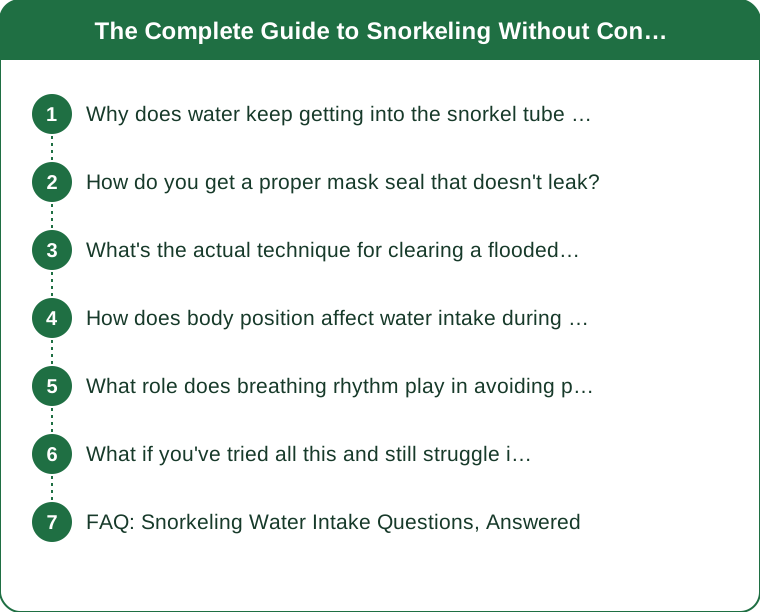
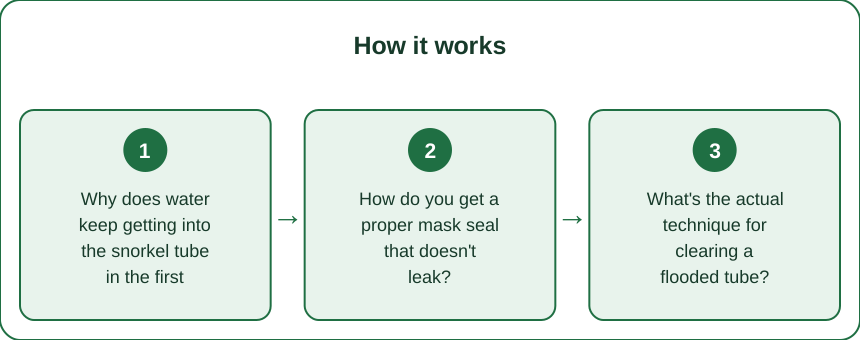
Why does water keep getting into the snorkel tube in the first place?
Water enters the tube primarily through waves washing over the top opening, or the tube dipping below the surface when you shift position, turn your head, or duck-dive without clearing it first. A poorly fitted mask can also let water seep in separately from the nose area, which compounds the feeling of “swallowing water” even though it’s coming from two different entry points.
Understanding that these are two separate problems — tube flooding versus mask seal failure — is the first step to actually fixing it, since people often try to solve mask issues with snorkel adjustments and vice versa, addressing the wrong half of the problem.
How do you get a proper mask seal that doesn’t leak?
Press the mask to your face without the strap and inhale gently through your nose — a properly fitting mask should stay sealed on your face through suction alone for a few seconds. If it falls or leaks air, that size or shape isn’t right for your face, regardless of how tightly you strap it on.
Facial hair, hair strands caught under the seal, and an over-tightened strap (which can actually warp the seal rather than improve it) are common causes of leaks even with a correctly sized mask. A snug, even strap tension, evenly positioned, outperforms an aggressively tight one every time.
What’s the actual technique for clearing a flooded tube?
The blast-clear method: take a sharp, forceful exhale through the tube the moment your head surfaces, using your breath to push water out the top rather than trying to breathe in through a still-flooded tube. This should become close to automatic with practice — most experienced snorkelers do it without consciously thinking about it after their first few sessions.
An alternative for tubes with a purge valve at the bottom (common on many modern snorkels) is a gentler exhale, since the valve directs water out through the bottom instead of requiring you to blast it entirely out the top — check which type your snorkel is before assuming you need the full blast-clear technique.
How does body position affect water intake during a session?
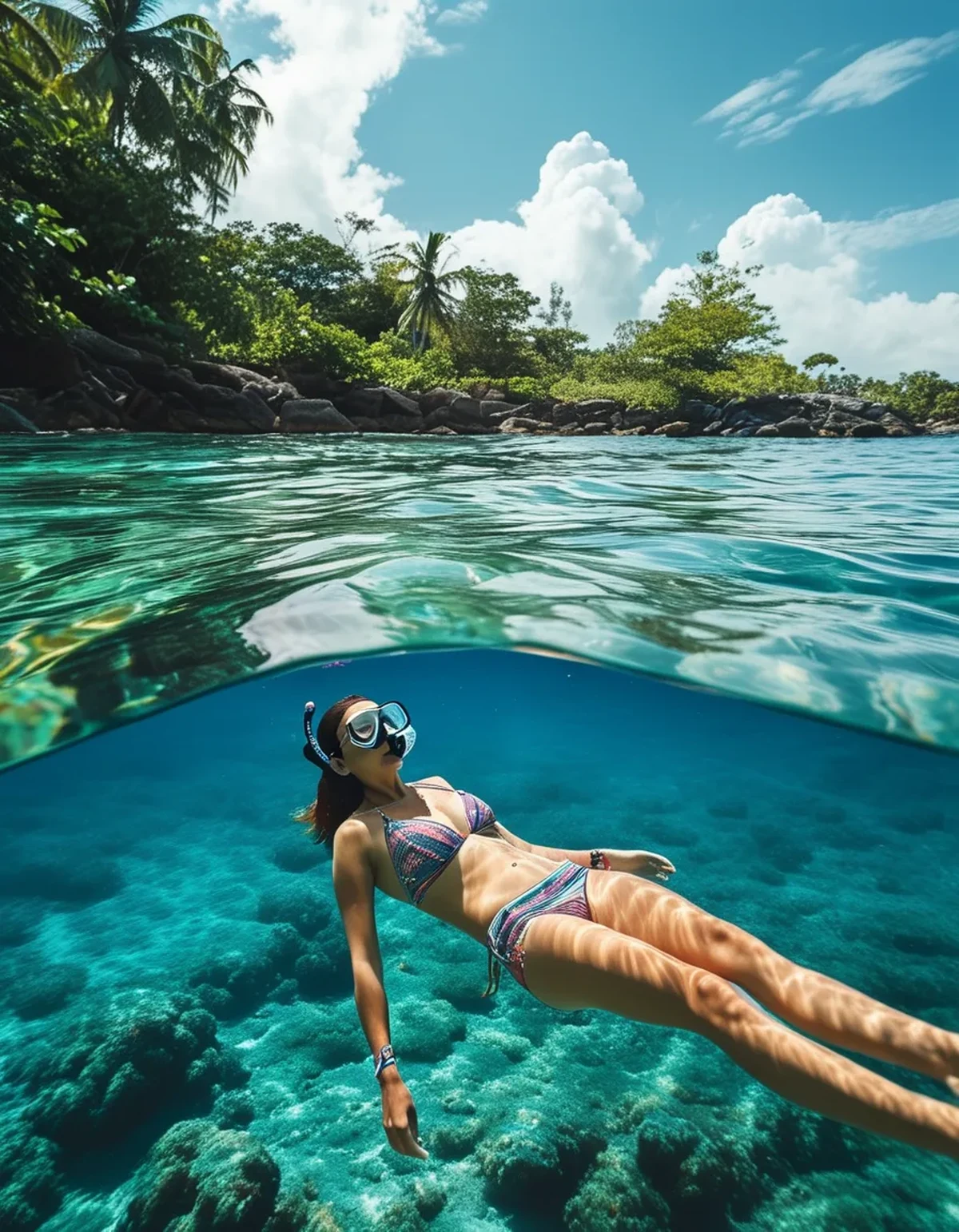
Keeping your head in a relatively neutral, face-down position with the tube pointed straight up minimizes how often waves or your own movement dip the tube opening below the surface. Frequently lifting your head to look around (a common beginner habit, often from anxiety about surroundings) is one of the biggest unnecessary causes of tube flooding, since it repeatedly changes the tube’s angle relative to the water surface.
Practicing a calm, mostly-horizontal float in shallow, calm water before heading to open water with waves lets you build the muscle memory for stable positioning without the added stress of current or waves complicating the learning process.
What role does breathing rhythm play in avoiding panic and water intake?
Slow, deliberate breathing through the tube, rather than quick anxious breaths, reduces the chance of inhaling at the exact moment a small amount of water enters, which is often what triggers the coughing-and-swallowing cascade beginners experience. Anxious, rapid breathing also increases the odds of an ill-timed inhale coinciding with a wave or dip.
If you do get a small amount of water in the tube, a brief pause to exhale-clear before your next inhale, rather than panicking and yanking the mask off immediately, keeps a minor annoyance from escalating into a stressful, water-swallowing moment.
What if you’ve tried all this and still struggle in open water with waves?
Practice progressively — master calm, flat water first, then add mild chop, before attempting genuinely wavy open-water conditions. Trying to learn tube-clearing and mask-sealing technique for the first time in choppy conditions stacks multiple new skills on top of challenging conditions simultaneously, which is a common reason people conclude “I’m just not good at snorkeling” when it’s actually a sequencing issue.
A snorkel with a dry-top valve (a mechanism that closes if the tube goes underwater) can also meaningfully reduce water intake for people still building confidence, worth the investment if open-water conditions are a regular part of your trips.
FAQ: Snorkeling Water Intake Questions, Answered
Is swallowing some water while snorkeling normal for everyone at first?
Yes, it’s an extremely common part of the learning curve — most people improve significantly within their first few sessions once mask fit and clearing technique are addressed.
Does a dry-top snorkel eliminate the need to learn clearing technique?
It reduces water intake significantly but doesn’t fully replace the value of knowing the blast-clear method for the occasional wave that still gets through.
How can I tell if my mask fit is the problem versus my snorkel technique?
The suction test (pressing the mask on without the strap and inhaling through your nose) isolates mask fit specifically — if it fails that test, start there before troubleshooting your tube technique.
TL;DR:
- Water intake comes from two separate sources: tube flooding and mask seal leaks
- Test mask fit with the no-strap suction test before assuming it’s a technique issue
- Master the blast-clear exhale technique to push water out of the tube
- Practice in calm water first before tackling open water with waves
- A dry-top snorkel valve can help significantly while you’re still building confidence
Start your next session with the mask suction test on dry land — isolating whether the problem is fit or technique makes everything after it much easier to fix.
Keep Reading
This article is for general informational and styling purposes only. Fit, sizing, and product availability may vary.