The Complete Guide to Stopping Mask Fogging and Flooding Before They Ruin a Snorkel Trip
Quick Answer: Mask fogging comes from condensation forming on a cold or untreated lens meeting warm, humid breath, while flooding usually comes from an imperfect seal against the face — both are preventable with a proper pre-dive defog treatment and a correctly fitted, hair-free seal, and both are fixable mid-swim without panicking.
A foggy or flooding mask can turn an exciting first snorkel trip into a frustrating one fast — but both problems come down to a small number of fixable causes.

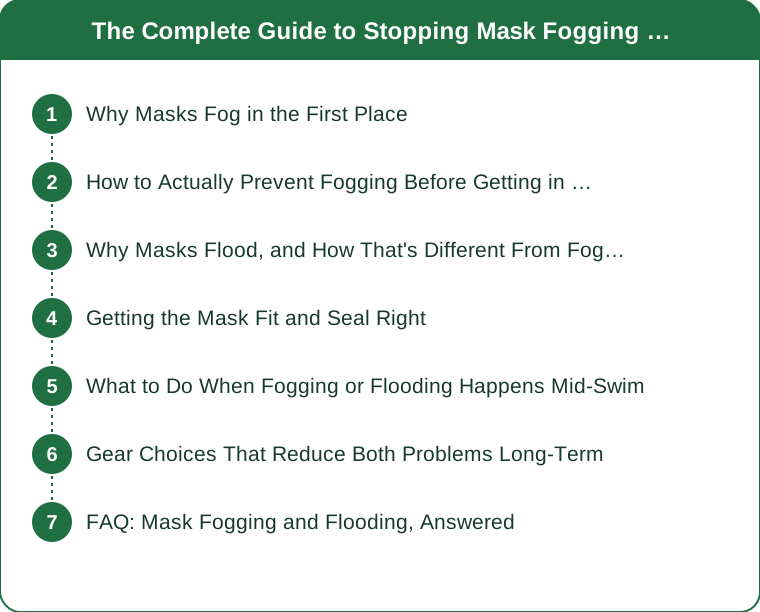
Why Masks Fog in the First Place
Fogging happens when warm, humid air from your breath and body heat condenses on the inside of a cooler mask lens, forming tiny water droplets that scatter light and cloud your view. New masks are especially prone to this because they come from the factory with a thin silicone-based residue on the lens that actively resists water sheeting evenly, making condensation cling in visible droplets rather than spreading into an invisible thin film. This is why even an expensive, well-fitted mask fogs constantly right out of the box until that residue is properly removed.
How to Actually Prevent Fogging Before Getting in the Water
The most reliable fix starts before the trip: a new mask needs its factory residue removed, typically by scrubbing the inside lens with a non-gel toothpaste or a dedicated mask-cleaning product, rinsing thoroughly, and repeating if needed until water sheets evenly rather than beading. After that initial treatment, a defogging spray or gel applied to the dry lens before each use, then rinsed lightly, coats the surface so condensation spreads into an invisible film instead of clouding droplets. Household alternatives like a diluted baby shampoo solution work similarly by breaking surface tension in the same way commercial defog products do.
Why Masks Flood, and How That’s Different From Fogging
Flooding is a completely separate issue from fogging — it means water is actively getting past the skirt seal and entering the mask, rather than condensation forming inside an already-sealed mask. The most common cause is hair (or in some cases a beard) getting trapped under the silicone skirt, breaking the seal at that point. A poorly sized mask, a skirt that’s aged and lost flexibility, or a strap that’s uneven can also each independently cause a seal failure that lets water in around the edges.

Getting the Mask Fit and Seal Right
Before ever entering the water, a simple dry fit-test helps: press the mask gently to your face without using the strap and inhale slightly through your nose — if it stays sealed on suction alone for a few seconds, the basic fit is workable. Hair should be pushed back and kept clear of the entire skirt edge, not just the top. The strap should sit flat against the back of the head at a slight downward angle rather than straight across, since a straight strap tends to let the mask ride up and break the seal at the top.
What to Do When Fogging or Flooding Happens Mid-Swim
If fogging appears despite prevention, treading water calmly, lifting the mask slightly at the bottom edge to let a small amount of water in and swirl it around the inside lens, then tilting to drain it out (a technique sometimes called a partial flood-and-clear) can temporarily clear condensation using the surrounding water itself. For actual flooding, the standard clear technique is tilting the head back slightly, pressing the top of the mask against the forehead, and exhaling firmly through the nose to push water out the bottom skirt edge — practicing this in shallow, calm water before heading to deeper or rougher conditions builds real confidence for when it happens for real.
Gear Choices That Reduce Both Problems Long-Term
A mask with a smaller internal air volume generally fogs less since there’s less humid air trapped inside to condense, and tends to clear faster when flooding does occur since less water needs to be purged. Silicone skirts (versus older rubber materials) tend to seal more reliably against skin and hold their flexibility longer, which reduces flooding risk as gear ages. Replacing an old, stiff skirt is often a more effective long-term flooding fix than repeatedly adjusting strap tension on aging gear that’s lost its seal quality.

FAQ: Mask Fogging and Flooding, Answered
How often does a mask need to be re-treated with defog after the initial toothpaste scrub?
The initial residue removal is typically a one-time treatment, but a defog spray or gel is generally reapplied before each outing since its coating wears off with use and rinsing.
Is spitting in the mask actually an effective defog method?
It has some real basis — saliva contains compounds that reduce surface tension similarly to commercial defog products, though it’s generally less consistent and less pleasant than a dedicated defog solution.
Does a full-face snorkel mask solve fogging and flooding differently than a traditional mask?
Full-face designs separate breathing and viewing airflow to reduce fogging from breath specifically, though they introduce their own fit and seal considerations that are worth researching separately before choosing one over a traditional mask.
TL;DR:
- Fogging comes from warm breath condensing on a lens still coated in factory residue
- A thorough initial scrub plus pre-swim defog treatment prevents most fogging
- Flooding is a separate seal issue, most often caused by hair trapped under the skirt
- A proper dry fit-test and correct strap angle meaningfully reduce flooding risk
- Practicing the standard clear technique in calm shallow water builds real confidence
Both problems are common, well understood, and very fixable with the right prep and a little practice.
Keep Reading
This article is for general informational and styling purposes only. Fit, sizing, and product availability may vary.