Why the Toothpaste Trick for Foggy Snorkel Masks Works Worse Than People Think
Rubbing toothpaste on a snorkel mask lens circulates as a reliable anti-fog trick, but most toothpaste contains mild abrasive particles meant for scrubbing tooth enamel, and those same particles can leave fine scratches on a mask’s plastic or glass lens that make fogging worse over time rather than better.

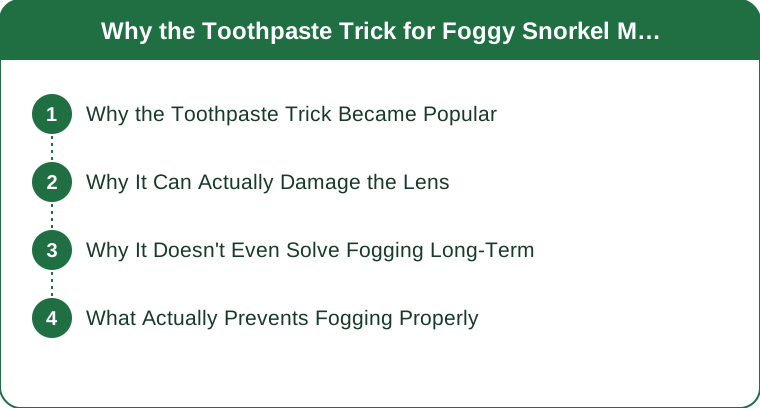
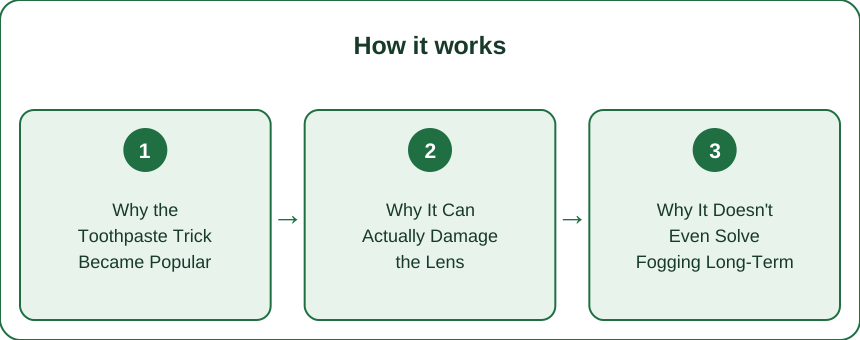
Why the Toothpaste Trick Became Popular
The appeal: toothpaste being something almost everyone already has on hand, and enough people reporting temporary defogging success that the tip spread widely as a free, convenient fix.
Why It Can Actually Damage the Lens
The hidden cost: toothpaste formulated with mild abrasive particles designed to polish tooth enamel, and those same particles rubbing against a mask lens leave microscopic scratches that build up with repeated use, scratches that themselves scatter light and worsen visibility.

Why It Doesn’t Even Solve Fogging Long-Term
The limitation: toothpaste’s anti-fog effect coming from a thin residue that temporarily reduces surface tension, an effect that rinses away within one or two uses, meaning the trick has to be repeated constantly while slowly scratching the lens each time.
What Actually Prevents Fogging Properly
The better method: a dedicated anti-fog spray or gel made for dive and snorkel gear, or diluted baby shampoo, both of which reduce surface tension without any abrasive particles, applied before each use and rinsed lightly rather than scrubbed, and the frame (toothpaste’s abrasive particles scratch the lens while barely fixing fogging long-term — a proper anti-fog spray or diluted baby shampoo is what actually keeps a mask clear without damaging it.)
Rubbing toothpaste on a snorkel mask lens circulates as a reliable anti-fog trick, but most toothpaste contains mild abrasive particles designed to polish tooth enamel, and those same particles rubbing against a mask lens leave microscopic scratches that build up with repeated use and themselves scatter light, worsening visibility over time. Toothpaste’s anti-fog effect comes from a thin residue that temporarily reduces surface tension, an effect that rinses away within one or two uses, meaning the trick has to be repeated constantly while slowly scratching the lens each time. A dedicated anti-fog spray or gel made for dive and snorkel gear, or diluted baby shampoo, reduces surface tension without any abrasive particles and is what actually keeps a mask clear without damaging it.
Keep Reading
This article is for general informational and styling purposes only. Fit, sizing, and product availability may vary.