The Complete Guide to Snorkeling When You Are Not a Confident Swimmer
Quick Answer: Snorkeling asks far less of you than swimming does. A wetsuit or buoyancy vest makes floating effortless, fins provide propulsion so your arms do nothing, and the snorkel means you never lift your head to breathe. The real barriers are almost always equipment fit and anxiety, not swimming ability - and both are fixable with preparation. What you genuinely need is: comfort with your face in water, a properly sealed mask, positive buoyancy, calm conditions, and someone with you.
This guide covers each of those in the order you should tackle them - and the honest limits of what this does and does not make safe.
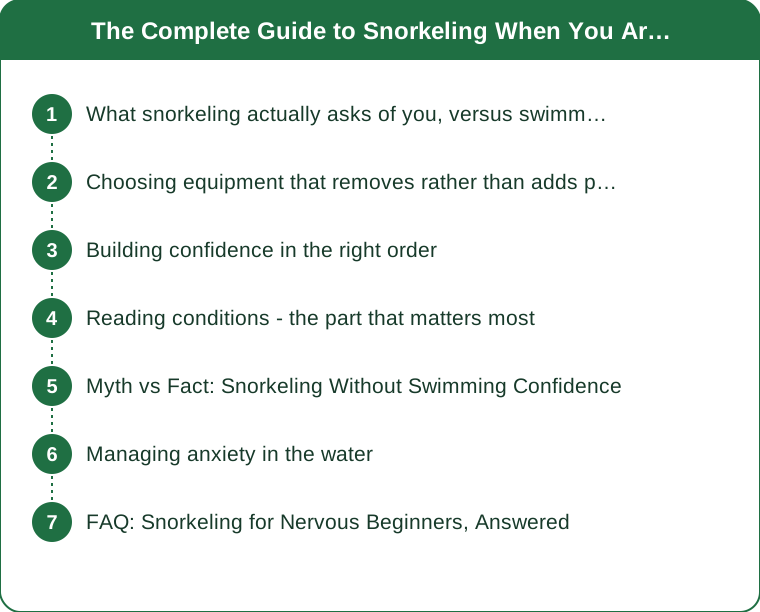
What snorkeling actually asks of you, versus swimming
Swimming requires you to generate lift, propulsion, and breathing rhythm simultaneously. You hold your body at the surface with continuous effort, you time breathing to stroke, and you fatigue steadily. Snorkeling removes all three demands.
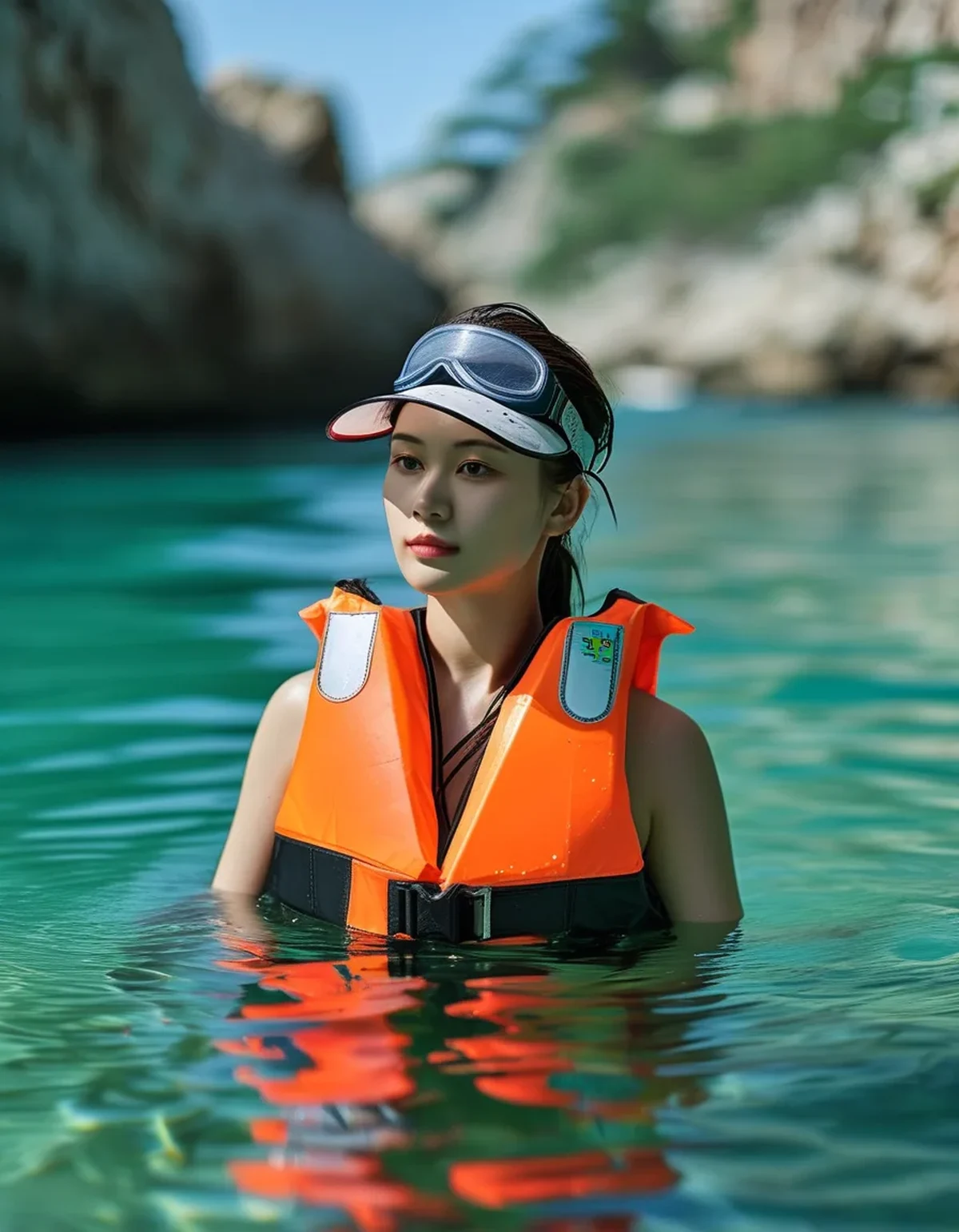
Buoyancy is provided, not generated. A wetsuit is inherently buoyant - a 3mm shorty provides meaningful positive buoyancy on its own, and a snorkel vest can be inflated to hold you comfortably at the surface with zero effort. You are not holding yourself up; the equipment is.
Propulsion comes from fins, and only from your legs. Slow, long kicks from the hip with relatively straight legs move you steadily. Your arms do nothing at all - and keeping them at your sides or lightly clasped behind your back is standard technique. This surprises people, because arm-flailing is what makes swimming exhausting.
Breathing is continuous and unbroken. The snorkel means your face stays in the water and your breathing never has to be timed to anything. For many nervous swimmers this is the single largest difference - the panic in swimming often comes from breath timing, and snorkeling deletes it entirely.
Salt water adds real buoyancy on top. Seawater is denser than fresh, so you float noticeably more easily than in a pool. People who sink in a pool often float without effort in the sea, which changes the experience considerably.
What snorkeling does still require is comfort with your face in the water, the ability to stay calm when something unexpected happens - a splash, a wave, water in the mask - and enough basic water competence to move yourself a short distance if you need to. That last one is the honest floor. Being unable to swim at all does not make snorkeling impossible, but it does mean you need a vest, shallow calm water, and a companion, without exception.
And the sequence matters. Almost everyone who has a bad first experience did the steps out of order - deep water before mask confidence, or open sea before a pool. The order in this guide is the order that works.
Choosing equipment that removes rather than adds problems
The mask is the single most important item and the one most beginners get wrong. A leaking or fogging mask is the most common cause of panic, and it is entirely preventable with a five-second fit test.
Test it properly before buying. Hold the mask to your face without the strap, inhale gently through your nose, and let go. It should stay in place on suction alone for several seconds. If it falls or you feel air leaking, the shape is wrong for your face and no amount of strap tightening will fix it - overtightening actually causes leaks by deforming the skirt.
Hair under the skirt is the second most common leak - a single strand breaks the seal. Pull hair back and check the seal at the forehead every time. Beards and moustaches leak too, and a smear of petroleum jelly is the standard workaround.
Buy a dry-top snorkel for a nervous beginner. It has a valve that closes when submerged, so it does not flood if a wave passes over it. For someone anxious about swallowing water, this removes a whole category of worry. A purge valve at the bottom also makes clearing far easier.
Fins should be comfortable, not powerful. Short, soft, flexible fins are ideal - stiff long freediving fins are exhausting for beginners and cause cramps. Full-foot fins for warm water, open-heel with boots for cooler water or rocky entries. Too tight causes cramp; too loose causes blisters.
Wear a buoyancy aid without hesitation. A snorkel vest can be inflated and deflated at the surface and is designed exactly for this. A wetsuit does the same job while also keeping you warm - and cold is more tiring than most people expect. There is nothing amateur about wearing one; plenty of confident swimmers do.
And prepare the mask before you get in. Anti-fog solution or baby shampoo diluted in water, rubbed inside the lens and rinsed lightly, prevents fogging. New masks need their factory silicone film scrubbed off first with toothpaste or a dedicated cleaner - this is why brand-new masks fog worst of all, and it catches almost everyone once.
Building confidence in the right order
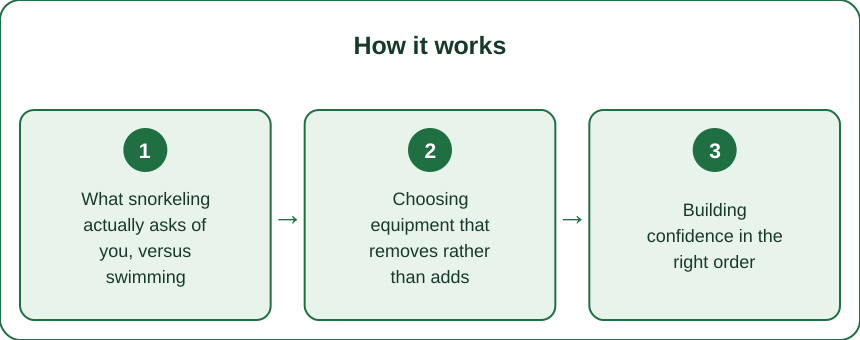
Start in a swimming pool, not the sea. Everything - mask, snorkel, breathing, fins - should be familiar before conditions become a variable. A single pool session removes most of the fear people bring to the sea.
Step one: breathing through the snorkel standing in shallow water. Face in, breathe slowly through the mouth for two minutes. That is the entire first step, and it feels strange for about 30 seconds before it becomes natural. Do not progress until this is boring.
Step two: float face-down in shallow water where you can stand. Arms at your sides, breathe steadily. Notice that you float without effort - this is the realisation that changes everything for nervous swimmers, and it needs to happen where standing up is always an option.
Step three: practise clearing your mask and snorkel. Deliberately let a little water into the mask, then lift the bottom edge slightly and exhale through your nose to push it out. Blow hard through the snorkel to clear it. Doing this on purpose, calmly, in a pool means the first accidental flood in the sea is a familiar situation rather than an emergency.
Step four: add fins and practise kicking. Slow, long kicks from the hip, legs mostly straight, fins staying under the water rather than splashing above it. Most beginners kick far too fast and from the knee, which is tiring and ineffective.
Step five: move to shallow calm sea with a companion. Water where you can stand, entering from a gentle beach, with someone who knows you are new to this. Stay in the shallows for the whole first session, however boring that sounds.
Progress only when each step is genuinely dull. The temptation is to move on as soon as something is survivable. Confidence is built by repetition of the easy version, and every step skipped tends to reappear as anxiety later.
Reading conditions - the part that matters most
Conditions matter more than skill for a beginner, and this is the section to take most seriously. A strong swimmer in bad conditions is in more danger than a weak one in good conditions.
Look for calm, clear, sheltered water. A bay or cove protected from the prevailing wind, with no visible surface chop and no waves breaking on the entry point. If you can see the bottom clearly, visibility is good and you will be far more comfortable.
Check the wind before anything else. Wind creates chop, chop causes snorkel flooding and disorientation, and offshore wind can push you away from shore faster than you can swim back. Any noticeable wind means postpone.
Learn to spot a rip current. Look for a channel of darker, calmer-looking water cutting through breaking waves, often with foam or debris moving seaward. If caught in one, do not swim against it - swim parallel to shore until out of the flow, then come in. Rip currents are the single biggest hazard at beaches and they look deceptively inviting.
Understand the tide before you enter. An incoming tide is generally safer than an outgoing one, which can pull you away from shore. Local tide tables are freely available and worth two minutes.
Ask locally, always. Lifeguards, dive shops, and boat operators know which entry is safe, where the current runs, and what today specifically is doing. This is the highest-value information available and it is free.
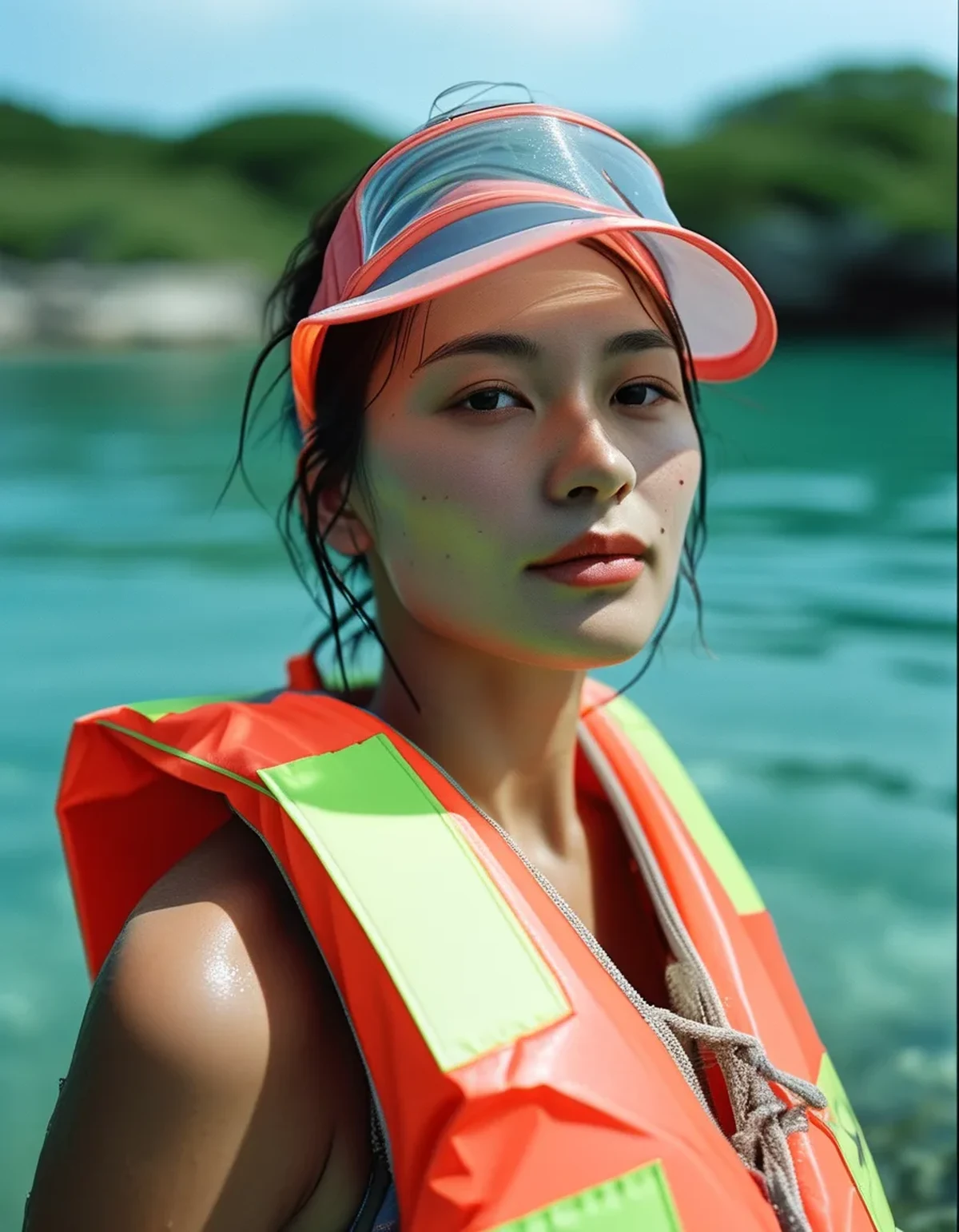
Never enter alone, and tell someone on shore your plan and expected return time. Snorkel with a buddy who stays within a few metres, not somewhere on the same beach. And a bright vest or float makes you visible to boats, which is a genuine risk in many popular snorkeling areas.
And know your exit before you enter. Look at where you will get out, including the alternative if the wind picks up. Entry is easy and everyone plans it; the exit is what causes problems.
Myth vs Fact: Snorkeling Without Swimming Confidence
Myth: you have to be a strong swimmer to snorkel. Fact: you need to be comfortable in water, not fast in it. Buoyancy and propulsion are provided by equipment. What you do need is enough competence to move yourself a short distance and stay calm - which is a much lower bar than swimming lengths.
Myth: a life jacket ruins the experience. Fact: a snorkel vest holds you at the surface, which is exactly where you want to be. It removes effort and anxiety and lets you look down for longer - many confident snorkelers use one for exactly that reason.
Myth: you will inevitably swallow water. Fact: a dry-top snorkel largely prevents flooding, and clearing the snorkel with one sharp exhale becomes automatic within one session. Practise it deliberately in a pool and it stops being a concern.
Myth: toothpaste is the best anti-fog. Fact: toothpaste is for scrubbing the factory film off a new mask, once. For ongoing use, anti-fog solution or diluted baby shampoo works better and does not scratch the lens over time.
Myth: fins make you go faster so beginners should avoid them. Fact: fins make you more efficient, not just faster, which means less fatigue and better control. Short soft fins are strictly easier than no fins for a beginner.
Myth: shallow water is always safer. Fact: very shallow water over rock or coral is where people get cut and where surge pushes you around most. Chest-deep calm water over sand is safer than knee-deep water over reef - and never stand on coral, which damages it and cuts you.
Myth: if you panic you can just stand up. Fact: only if you are in standing depth, which is exactly why the first sessions should be. The plan for panic is to roll onto your back, hold the vest, and breathe - and that needs practising before it is needed.
Managing anxiety in the water
Panic is a breathing problem before it is anything else. Rapid shallow breathing raises heart rate and creates a sense of not getting enough air, which then produces more rapid breathing. Interrupting it early is the whole skill.
The reset is: stop, float, breathe out slowly. Roll onto your back if you can, hold onto your float or vest, and make the out-breath longer than the in-breath for five or six breaths. Do not try to swim anywhere while this is happening.
Practise the reset before you need it. Deliberately roll onto your back in the shallows and do the breathing sequence, so it is a rehearsed action rather than something you have to invent under stress.
A float or noodle changes the psychology entirely. Something you can hold at any moment means the water always has a solution in it. Many people find one item they can grip removes most of their anxiety, and towing a bright float also makes you visible to boats.
Set a small distance limit and stick to it. Deciding in advance to stay within a defined area removes the constant decision about whether to go further, which is itself a source of stress.
Cold contributes more than people credit. Getting cold produces shivering, faster breathing, and worse decisions. A wetsuit or shorty is worth wearing even in warm water if you plan to be in for more than 30 minutes - and in late summer, when the water is still warm but the air has cooled, getting out is when you feel it.
And go with someone who understands where you are. A companion who knows this is new and will stay close is worth more than any equipment. Say so explicitly before getting in rather than hoping it is understood.
One honest note: if being in open water produces genuine dread rather than nerves, there is no obligation to push through it. Structured lessons with an instructor in a pool, or simply enjoying the water from a boat, are both entirely legitimate. This is general information, not medical advice - and anyone with a heart or respiratory condition, or who is pregnant, should get medical advice before snorkeling.
FAQ: Snorkeling for Nervous Beginners, Answered
Can I snorkel if I cannot swim at all?
With a buoyancy vest, in shallow calm water, with a companion or guide - many people do. But it is genuinely safer to learn basic water competence first, and any operator taking it seriously will ask about your ability.
Should I wear a life jacket or snorkel vest?
Yes if it helps you relax. A snorkel vest is designed for this, can be inflated and deflated at the surface, and holds you where you want to be anyway. There is nothing amateur about it.
What do I do if my mask fills with water?
Stay at the surface, press the top of the mask against your forehead, tilt your head slightly back, and exhale through your nose. The water pushes out of the bottom. Practise this deliberately in a pool first.
Why does my mask keep fogging?
New masks have a factory silicone film that needs scrubbing off once with toothpaste or a dedicated cleaner. After that, anti-fog solution or diluted baby shampoo before each session prevents it.
How do I know if conditions are safe?
Calm sheltered water, no noticeable wind, good visibility, no waves breaking at the entry, and an incoming rather than outgoing tide. Ask a lifeguard or local dive shop - it is the best information available and it is free.
What if I panic in the water?
Stop, roll onto your back, hold your vest or float, and make your out-breath longer than your in-breath for five or six breaths. Rehearse this in shallow water so it is familiar.
How long should a first session be?
Twenty to thirty minutes in shallow water. Cold and fatigue both arrive faster than people expect, and a short good session builds far more confidence than a long uncomfortable one.
TL;DR:
- Snorkeling is not swimming. Buoyancy comes from a wetsuit or vest, propulsion from fins, and breathing is continuous - the three hardest parts of swimming are removed.
- The mask is the make-or-break item. Test the seal by suction without the strap; overtightening causes leaks rather than fixing them.
- Scrub the factory film off a new mask once, then use anti-fog before every session.
- Build up in order: pool breathing, face-down float in standing depth, mask clearing, fins, then shallow calm sea. Progress only when each step is boring.
- Conditions beat skill. Sheltered water, no wind, good visibility, incoming tide, and local advice. Know your exit before you enter.
- Wear a vest, tow a bright float, and never go alone. Both are about visibility to boats as well as buoyancy.
- The panic reset is: stop, roll onto your back, long slow out-breaths. Rehearse it before you need it.
If open water produces real dread rather than nerves, lessons in a pool are a legitimate route. Anyone with a heart or respiratory condition, or who is pregnant, should get medical advice first. This is general information, not medical advice.
Keep Reading
This article is for general informational and styling purposes only. Fit, sizing, and product availability may vary.