Why a Snorkel Mask That Passed the Dry-Land Seal Test Can Still Fog Up Mid-Swim
The classic dry-land seal test — pressing the mask to the face without the strap and inhaling gently to see if it holds by suction — is a genuinely reliable way to confirm a mask fits, and passing it easily still doesn’t guarantee a fog-free swim, because a good seal and a fog-free lens are actually solving two completely different problems.
Why the Seal Test Only Confirms Fit, Not Fogging Risk
The gap: the-dry-land-suction-test-verifies-only-that-the-masks-edge-forms-an-airtight-contact-against-the-face-and-says-nothing-about-condensation-forming-on-the-inside-of-the-lens (the dry-land suction test verifying only that the mask’s silicone edge forms a genuinely airtight contact against the face, and saying absolutely nothing about whether condensation will form on the inside surface of the lens itself once in the water, per the snorkel-mask-defog-clear-guide logic — the-dry-land-suction-test-verifying-only-that-the-masks-silicone-edge-forms-an-airtight-contact-against-the-face-and-saying-nothing-about-whether-condensation-will-form-on-the-inside-surface-of-the-lens-once-in-the-water), and the reframe (fit and fogging being two independent variables the same test cannot check at once)).

Why Warm Breath Meeting Chilled Glass Is the Real Trigger
The mechanism: fogging-happens-when-warm-humid-breath-inside-the-mask-condenses-on-the-lens-once-the-glass-has-been-cooled-by-surrounding-water-temperature-a-condition-the-dry-land-test-never-replicates (fogging happening specifically when warm, humid breath trapped inside the mask condenses on the lens surface once that glass has actually been cooled by the surrounding water temperature, a condition the dry-land test performed at room temperature never replicates at all, per the snorkeling-beginner-guide logic — fogging-happening-specifically-when-warm-humid-breath-trapped-inside-the-mask-condenses-on-the-lens-surface-once-the-glass-has-been-cooled-by-surrounding-water-temperature-a-condition-the-dry-land-test-never-replicates), and the frame (a temperature gradient the land test cannot simulate being the actual cause)).
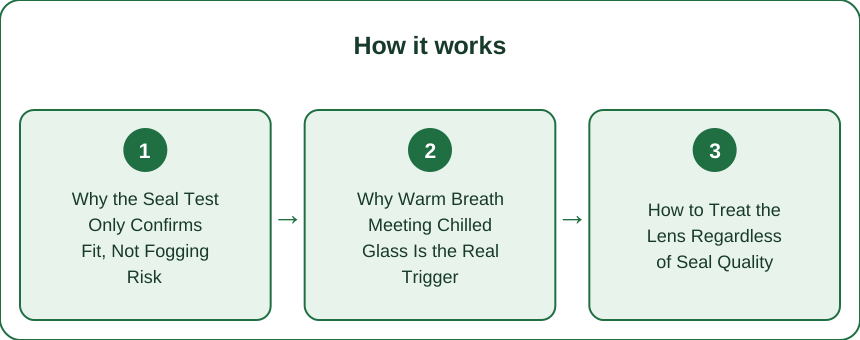
How to Treat the Lens Regardless of Seal Quality
The prep: apply-a-defog-solution-or-diluted-baby-shampoo-to-the-inside-of-the-lens-and-rinse-lightly-before-every-swim-regardless-of-how-well-the-mask-passed-the-dry-land-seal-test (applying a defog solution, or even a diluted drop of baby shampoo, to the inside surface of the lens and rinsing it lightly before every single swim, regardless of how well the mask happened to pass the dry-land seal test beforehand, per the snorkeling-safety-guide logic — applying-a-defog-solution-or-a-diluted-drop-of-baby-shampoo-to-the-inside-surface-of-the-lens-and-rinsing-it-lightly-before-every-single-swim-regardless-of-how-well-the-mask-passed-the-dry-land-seal-test), and the frame (treating the lens as its own separate step, independent of whatever the seal test already confirmed)).
The dry-land suction test verifies only that a mask’s edge forms an airtight seal against the face, and says nothing about whether condensation will form on the lens once warm breath meets glass that’s been chilled by the surrounding water — a temperature gradient the land test never replicates. Treating the inside of the lens with a defog solution or diluted baby shampoo before every swim, regardless of how well the seal test went, addresses that separate condensation problem directly instead of assuming a good seal covers it.
Keep Reading
This article is for general informational and styling purposes only. Fit, sizing, and product availability may vary.