Why Cold-Water Snorkeling Feels So Much Harder (Even With a Wetsuit)
Quick Answer: Cold water triggers an involuntary faster breathing response and reduces fine motor control in your hands and jaw within the first few minutes, which is why snorkel breathing and mask clearing feel noticeably clumsier in cold water than in warm, even for experienced snorkelers.
You’ve snorkeled plenty of times before, always somewhere warm, and it felt automatic. The first time you try it in cooler water, your breathing goes ragged almost immediately — and it’s not in your head.
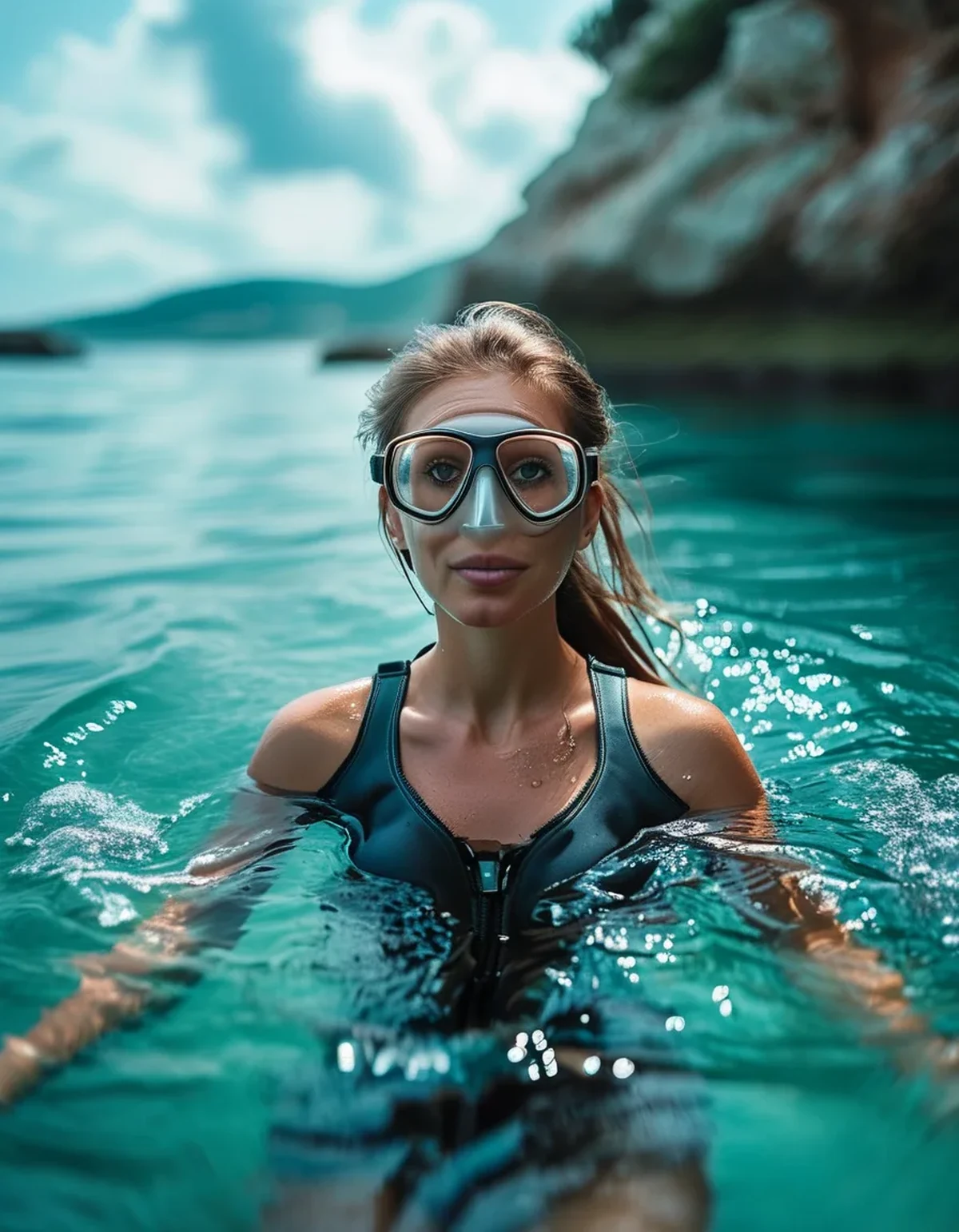
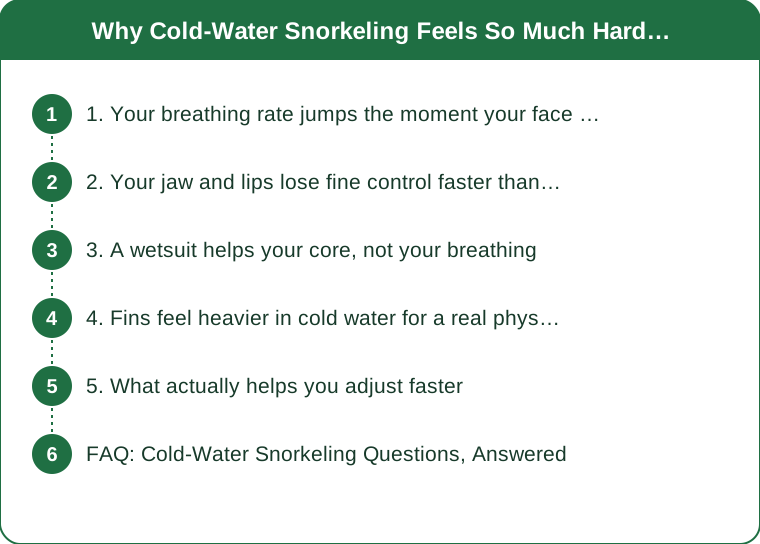
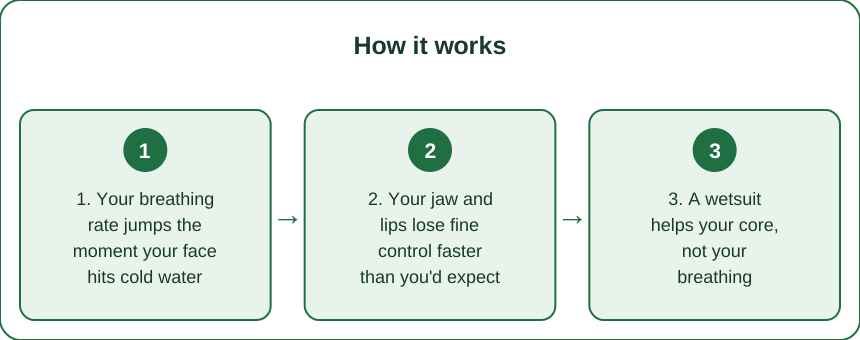
1. Your breathing rate jumps the moment your face hits cold water
This is called the cold shock response, an involuntary reflex that speeds up breathing rate for the first minute or two of cold water contact, regardless of how calm you feel mentally. It fades on its own, but if you don’t expect it, the sudden shallow breathing can feel alarmingly close to panic.
2. Your jaw and lips lose fine control faster than you’d expect
Cold water reduces blood flow to the extremities and face first, which means the muscle control needed to keep a good seal on your snorkel mouthpiece degrades noticeably within 10-15 minutes in cooler water — something that barely happens across a full warm-water session.
3. A wetsuit helps your core, not your breathing
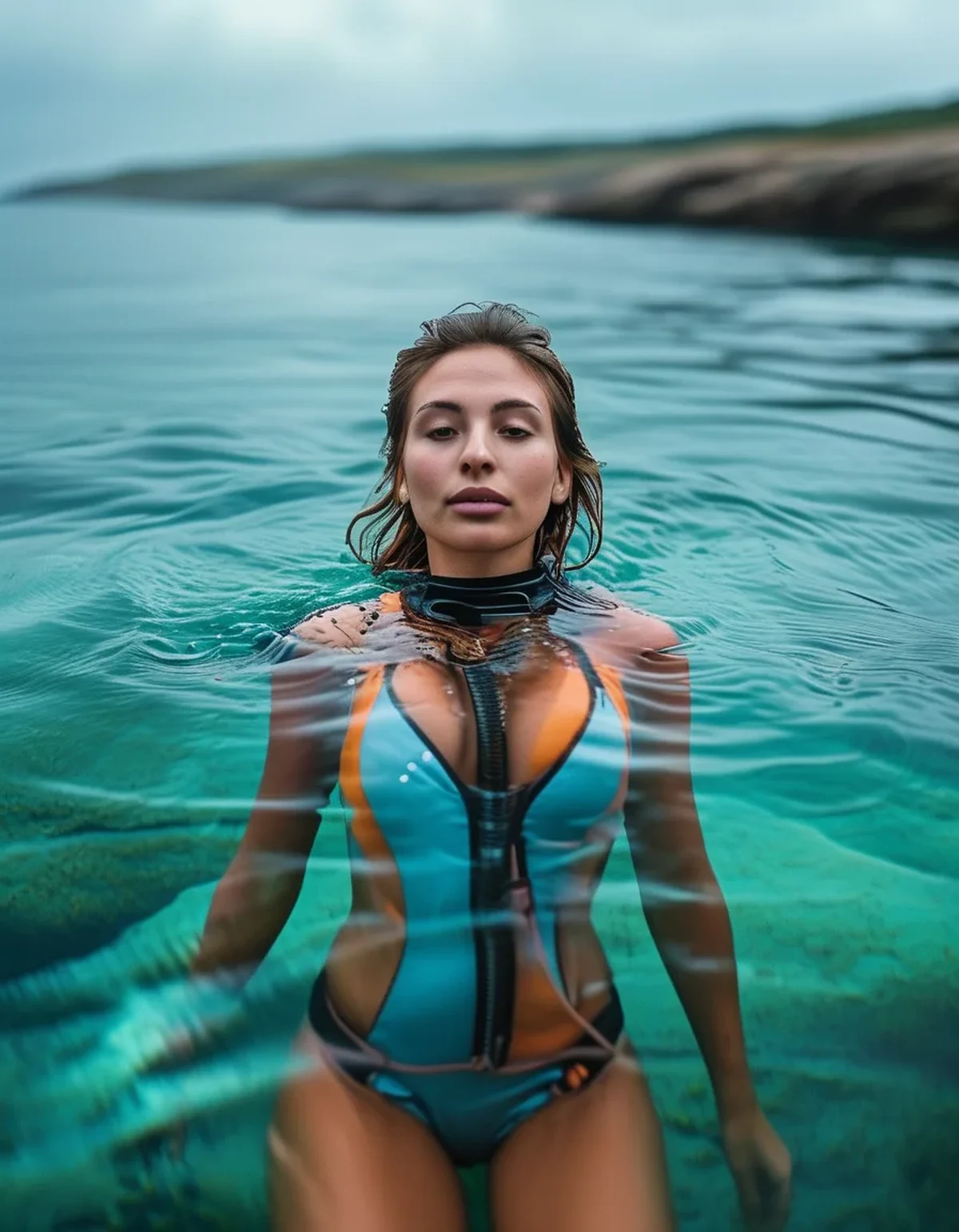
A wetsuit is genuinely effective at slowing core heat loss, but it does nothing for the cold shock response, since that reflex is triggered by cold water hitting your face and airway, areas a standard wetsuit doesn’t cover. A hood or a face-covering option changes this meaningfully.
4. Fins feel heavier in cold water for a real physical reason
Cold muscles produce less force per contraction than warm ones, a well-documented effect of temperature on muscle performance — so the same fin kick that felt light in warm water takes noticeably more effort once your legs have been in cold water for a while.
5. What actually helps you adjust faster
A few minutes of controlled breathing at the surface before submerging your face lets the cold shock response pass before you need fine breath control. Choosing a thicker wetsuit with a hood for consistently cold sites, rather than pushing through discomfort, is the difference most cold-water snorkelers say matters most.
FAQ: Cold-Water Snorkeling Questions, Answered
Does the cold shock response happen every single time, even once you’re used to cold water?
It lessens somewhat with repeated exposure, but the initial faster-breathing reflex rarely disappears completely, even for very experienced cold-water swimmers.
Is it more dangerous to snorkel in cold water than warm?
It carries different risks — mainly around breathing control and grip strength rather than heat exhaustion — which is why a hood and proper wetsuit thickness matter more in cold water than they do in the tropics.
How much colder does water need to be before this becomes noticeable?
Most people start noticing the effect once water drops meaningfully below body-comfortable swimming temperature, generally in the range many describe as “cool” rather than genuinely cold, so it applies to more sites than people expect.
TL;DR:
- Cold water triggers an involuntary faster-breathing reflex in the first minute or two, unrelated to fitness or experience
- Fine motor control in the jaw and lips fades faster in cold water, affecting mouthpiece seal
- A wetsuit protects your core but not the cold shock response itself — a hood matters more for breathing
- A few minutes of surface breathing before submerging lets the initial reflex pass
Cold water isn’t just less pleasant — it’s genuinely changing your breathing and muscle response, and a hood plus a short adjustment period fixes most of what feels different.
Keep Reading
This article is for general informational and styling purposes only. Fit, sizing, and product availability may vary.