Why Your Snorkel Mask Still Fogs Even After Using Anti-Fog Spray
Quick Answer: Anti-fog spray reduces fogging but doesn’t eliminate it if you skip the prep step (cleaning factory residue off new lenses) or if temperature difference between your face and the water is large. Spray is one piece of a three-part fix, not a standalone solution.
You followed the bottle’s instructions to the letter. The mask fogged anyway, twenty minutes into what should have been a clear view of the reef. That’s a common experience, and it usually means one of the other two pieces of the fogging puzzle got missed.

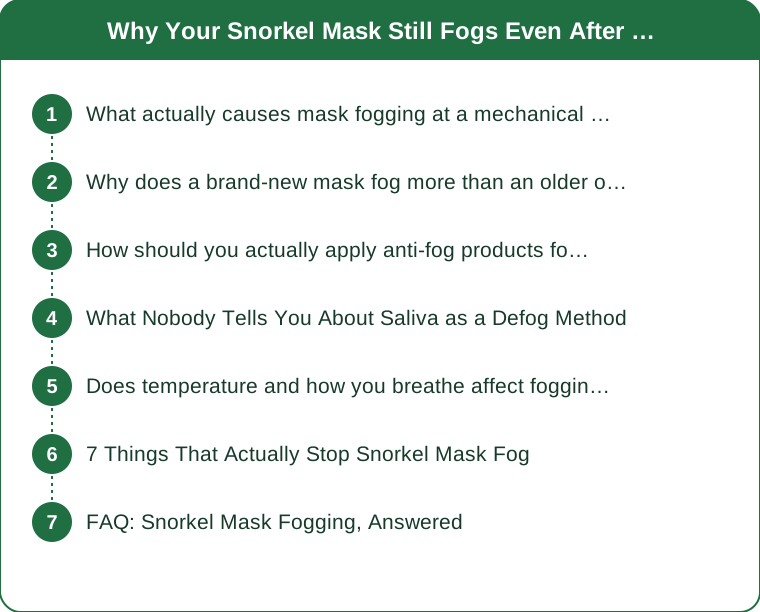
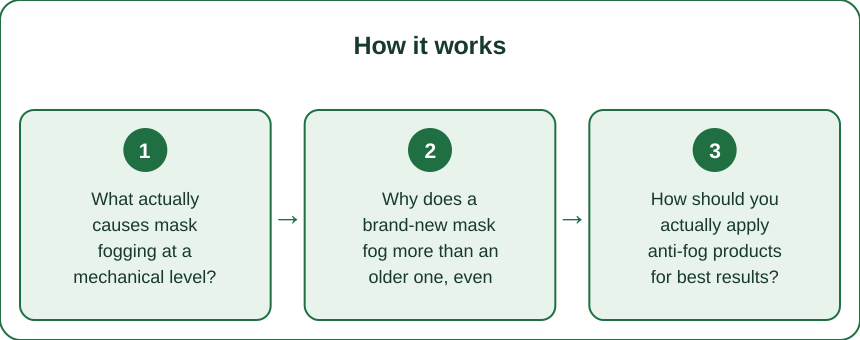
What actually causes mask fogging at a mechanical level?
Fogging happens when warm, moist air from your breath and face condenses into tiny water droplets on the cooler interior surface of the lens. Your face and breath are warmer than the surrounding water, and that temperature difference is the root driver — anti-fog products work by changing the surface tension of the lens so condensation spreads into a thin, clear film instead of visible droplets, but they can’t eliminate the underlying temperature difference causing condensation in the first place.
That’s the core reason spray alone sometimes isn’t enough: it’s treating the surface reaction, not the temperature gradient causing it.
Why does a brand-new mask fog more than an older one, even with spray?
New masks come from the factory with a thin silicone residue film left over from the manufacturing process, and this film actively repels anti-fog treatments, preventing them from bonding properly to the lens surface. Skipping the initial cleaning step — usually toothpaste or a dedicated defog gel scrubbed onto the dry lens before first use — means every subsequent spray application is fighting a residue layer it can’t fully penetrate.
This is the single most common reason people report ‘my anti-fog spray doesn’t work’ when the real issue is a lens that was never properly prepped in the first place.
How should you actually apply anti-fog products for best results?
Apply to a completely dry lens, since water dilutes the active ingredient before it can bond to the surface. Rub it in with a finger or soft cloth, let it sit for the time specified on the product (often 30-60 seconds), then rinse briefly with water — don’t wipe it off with a towel, which can remove the thin protective film you just built up. Reapply every few uses, since the coating wears down with each swim.

What Nobody Tells You About Saliva as a Defog Method
Here’s the detail most beginners never hear explained properly: spitting into the mask and rubbing it around, an old-school method still recommended by many dive shops, works through the exact same surface-tension mechanism as commercial spray — saliva contains proteins and enzymes that spread condensation into a thin film rather than droplets. It’s genuinely effective and free, but it wears off faster underwater than a proper commercial anti-fog coating, which is why serious snorkelers still use both: saliva as a quick top-up, commercial spray as the base layer.
Does temperature and how you breathe affect fogging mid-swim?
Yes — breathing heavily through your nose (for masks that cover the nose) increases the warm, moist air reaching the lens interior, accelerating fogging even with a properly treated mask. Slower, calmer breathing patterns, along with occasionally flooding the mask slightly with cool water and draining it, can reduce fogging that builds up over a long session even after a good initial defog treatment.
7 Things That Actually Stop Snorkel Mask Fog
- Clean factory residue off a new mask first — toothpaste scrub, rinse, before any spray.
- Apply anti-fog to a fully dry lens — water dilutes the active ingredient.
- Let the product sit the full recommended time before rinsing, don’t rush it.
- Rinse gently, don’t towel-wipe the coating off after application.
- Reapply every few sessions — the coating wears down with use, not indefinitely.
- Use saliva as a mid-swim top-up if fogging returns during a long session.
- Breathe calmly — heavy breathing through the nose accelerates warm-air fogging even on treated lenses.
FAQ: Snorkel Mask Fogging, Answered
How often should I reapply anti-fog spray?
Most products need reapplication every 1-3 snorkel sessions, since the coating gradually wears away with rinsing and handling.
Is baby shampoo a decent substitute for commercial anti-fog spray?
Yes, diluted baby shampoo works through a similar surface-tension mechanism and is a reasonable budget alternative, though commercial products typically last longer per application.
Does a mask with a nose pocket fog less than one without?
Not inherently — nose pockets mainly help with equalizing pressure on descents; fogging is driven by lens prep and temperature difference regardless of nose pocket design.
TL;DR:
- Fogging is caused by warm breath condensing on a cooler lens — spray manages the surface reaction, not the temperature gradient
- New masks need factory residue cleaned off first, or spray won’t bond properly
- Apply to a fully dry lens, let it sit, rinse gently — don’t skip steps
- Saliva works as a free mid-swim top-up using the same mechanism as commercial spray
- Calm breathing reduces the warm, moist air that accelerates fogging mid-session
Before your next swim, do the toothpaste prep scrub even on a mask you’ve had a while — it’s the step most people skip and the one that actually fixes ‘spray isn’t working.’
Keep Reading
This article is for general informational and styling purposes only. Fit, sizing, and product availability may vary.