Why Your Snorkelling Gets Worse in the Second Hour and How to Fix It
Quick Answer: Four things degrade together over a long snorkel: facial muscles relax and break the mask seal, heat loss accumulates even in warm water, dehydration builds faster than you notice while immersed, and jaw fatigue from gripping the mouthpiece changes your breathing. None are fitness problems. Fix them with a scheduled 20-minute break, water before and during, a rash guard or thin wetsuit top, and a mouthpiece you are not gripping.
The first forty minutes are the reason you came.
The second hour is a fight with your own equipment.
Nothing broke. Several small things drifted at once.
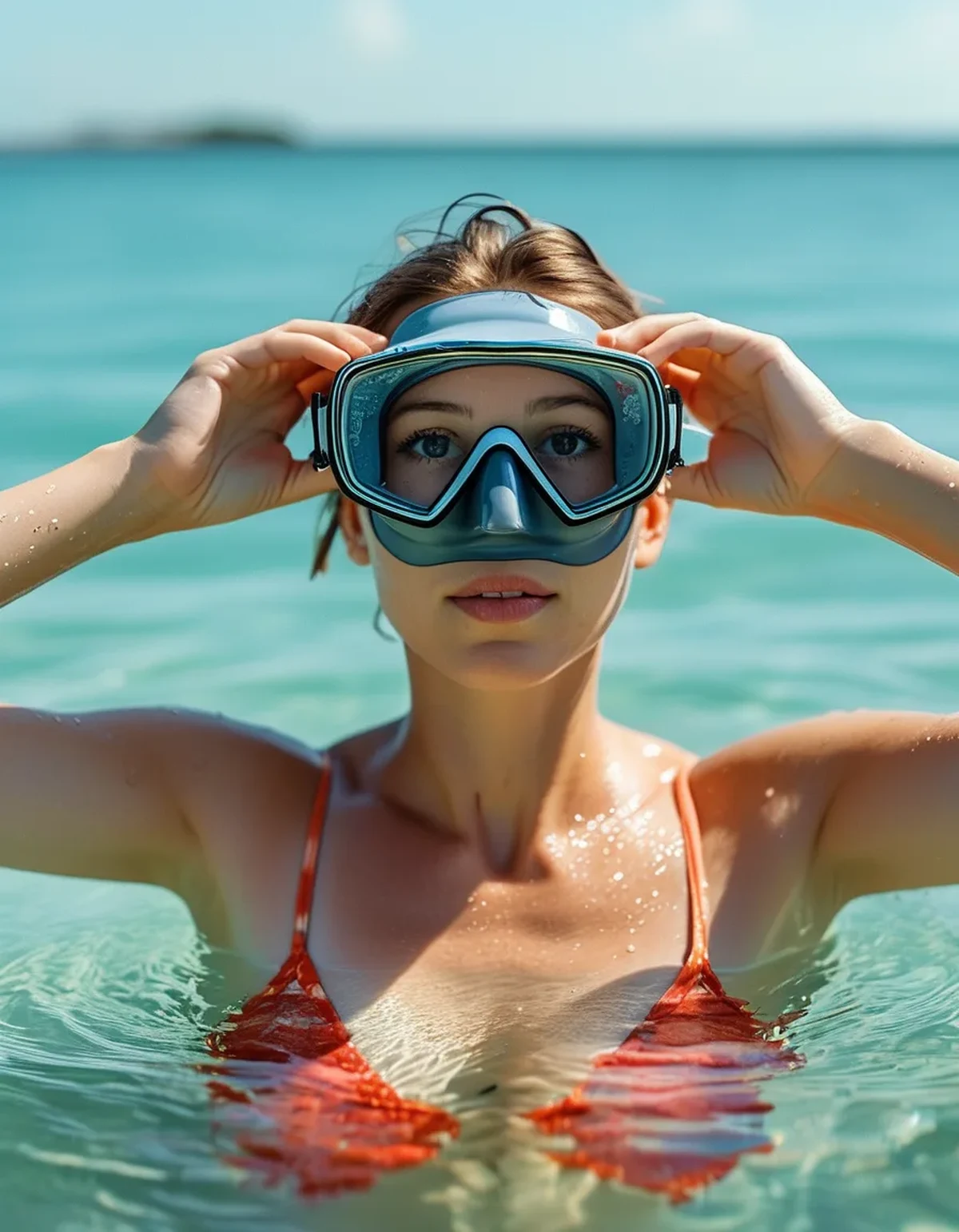
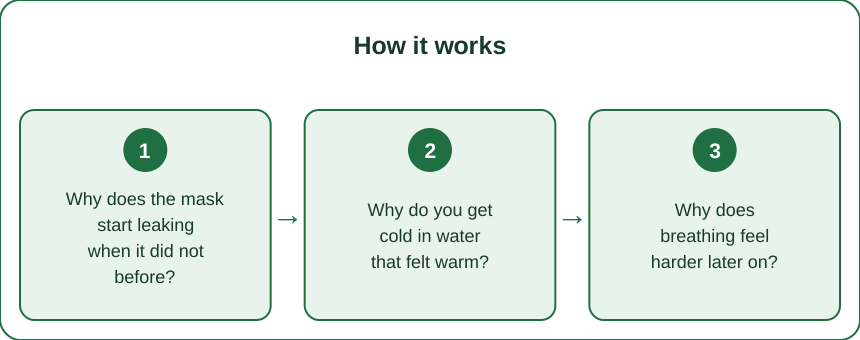
Why does the mask start leaking when it did not before?
Because the seal depends on your face, and your face changes.
Facial muscles relax over time. The tension holding your cheeks and the area around your mouth in a particular shape fades as you settle, and the silicone skirt loses contact where it was previously sealed.
Skin oils rebuild. You may have started with a clean, dry face; over an hour, natural oils return and reduce the seal’s grip.
Smiling breaks the seal instantly. This is the single most common cause of a mid-session leak, especially on a good snorkel where there is something worth smiling about. Cheek movement lifts the skirt at the corners of the mouth.
Over-tightening makes it worse, not better. A strap cranked down deforms the skirt and creates channels rather than pressing it flat. The strap positions the mask; the seal comes from suction and water pressure.
Sunscreen migrates. Applied to the forehead and around the eyes, it works its way to the sealing surface with sweat and water. Keep it clear of the skirt line.
Hair under the skirt is the other classic. A few strands at the forehead create a capillary path for water. It matters most on the forehead edge, and it is worth a deliberate check when you first fit the mask.
Why do you get cold in water that felt warm?
Because heat loss in water is relentless, and warm water is still colder than you.
Water conducts heat away far faster than air — on the order of 20 to 25 times more effectively. Even 82°F water is 16 degrees below your body temperature, and it never stops pulling.
Floating still is the worst case. Snorkelling involves very little muscular work, so you generate little heat while losing it continuously. This is why an hour of gentle floating chills you more than an hour of swimming.
Your head and neck lose a disproportionate amount, and in snorkelling your head is in the water almost continuously.
Shivering is late, not early. By the time you shiver you have already lost significant core heat. The earlier signs are subtler: stiff fingers, a slightly clumsy kick, reluctance to look at anything new.
Cold degrades judgement and coordination before it feels serious, which is the safety-relevant part.
Fix it cheaply. A rash guard or thin neoprene top transforms a two-hour session, weighs almost nothing and packs flat. In cooler late-season water, a 2mm shorty does the same job for a much wider window. Getting out for twenty minutes in the sun also works, and is the free version.
Why does breathing feel harder later on?
Several small changes stack into what feels like breathlessness.
Jaw fatigue changes your bite. Gripping the mouthpiece for an hour tires muscles that are not used to sustained clenching. As they tire, the seal loosens, small amounts of water enter and you tense further.
Breathing through a tube adds dead space. You re-breathe a portion of your own exhaled air with every breath. It is a modest effect, but it accumulates over a long session and makes each breath slightly less efficient.
Shallow rapid breathing makes it worse. As people tire, breathing gets shallower, which increases the proportion of dead space per breath. It becomes self-reinforcing.
Cold contributes directly. Cool skin causes involuntary shallower breathing, which is part of why the cold and the breathlessness arrive together.
Dehydration thickens things up. Immersion suppresses thirst and increases urine production, so you dehydrate faster in water than out of it — while feeling less thirsty.
Practical fixes: stop gripping (the mouthpiece should rest between your teeth, not be clamped), breathe deliberately deeply and slowly rather than quickly, consider a soft silicone or moldable mouthpiece if jaw ache is chronic, and drink water before you get in and at every break.
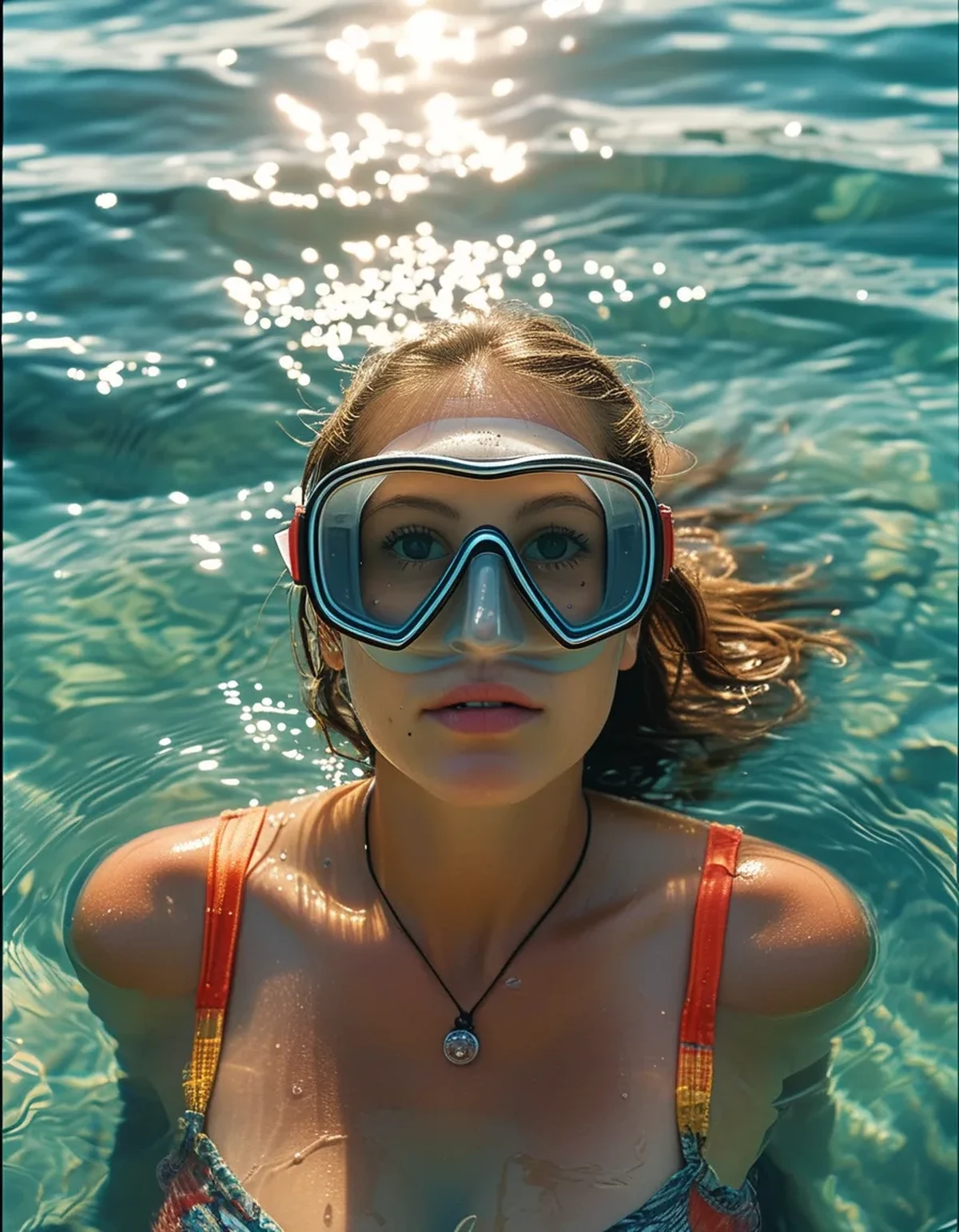
What does a well-paced snorkelling session look like?
Structure it rather than snorkelling until it stops being fun.
Drink 500ml before you get in. Immersion suppresses thirst and increases fluid loss — pre-hydrating is more effective than trying to catch up later.
Prep the mask properly. Clean the lens with a drop of dish soap and rinse, or use anti-fog. Do it before, not when it fogs. New masks need the manufacturing film removed with toothpaste or a dedicated cleaner or they will fog forever.
Fit the mask without the strap first. Place it on your face, breathe in gently through your nose, and see if it holds by suction alone. If it does not, the mask does not fit your face and no strap tension will fix it. Then set the strap just tight enough to keep it in place.
Wear a rash guard, even in warm water. Sun protection on your back and meaningful heat retention, for very little bulk.
Take a break at 45 to 60 minutes. Twenty minutes out, in the sun, with water and something to eat. This single change is the difference between one good hour and three.
Reapply sunscreen at the break — reef-safe, and keep it off the mask skirt.
Get out before you are cold, not after. Cold judgement is bad judgement, and it degrades before you notice.
This is general information, not a substitute for local safety guidance. Never snorkel alone, check conditions and currents, and follow local advice.
What Nobody Tells You About Long Snorkelling Sessions
Sun exposure through water is worse than you think. Water reflects and does not filter as much as people assume, and your back is presented flat to the sun for hours. A rash guard is more reliable than any reapplication schedule.
You dehydrate faster in water than on land. Immersion triggers increased urine production and suppresses thirst simultaneously. It is the one that catches out even experienced snorkellers.
The mask is the whole experience. Nothing else in the kit matters half as much. A mask that fits your face beats an expensive one that does not, and fit is testable in ten seconds with the suction check.
Fins change fatigue more than fitness does. Stiff fins tire calves quickly; softer, longer blades are far less work for the gentle pace of snorkelling. If your calves cramp, the fins are usually the reason.
Cramp is more often cold and dehydration than salt. Warm up, drink, and the cramps usually stop.
And the one that ends most sessions: people snorkel until it stops being enjoyable, then get out. Getting out at 50 minutes while it is still excellent, resting twenty, and going back in gives you two excellent hours instead of one good one and a bad one.
FAQ: Snorkelling Questions, Answered
Why does my mask fog even with anti-fog?
Usually residue on the lens, or a new mask with manufacturing film still on it. Clean thoroughly first — anti-fog cannot work over a film.
How tight should the strap be?
Just enough to hold position. The seal comes from suction and water pressure, and over-tightening deforms the skirt and causes leaks.
How do I know if a mask fits before buying?
Hold it to your face without the strap and breathe in gently through your nose. If it stays put on its own, it fits.
Do I need a wetsuit in warm water?
Not for a short session. For two hours or more, a rash guard or thin neoprene top makes a substantial difference to how long you last.
How long should a session be?
Break at 45 to 60 minutes. Twenty minutes out, then go back in. Continuous long sessions are where the problems compound.
Why do my calves cramp?
Usually fins that are too stiff, plus cold and dehydration. Softer fins and a proper drink before you get in solve most of it.
Is it safe to snorkel alone?
No. Always with a buddy, always with local knowledge of currents and conditions.
TL;DR:
- The second hour degrades because four small things stack: mask seal, heat loss, dehydration and jaw fatigue.
- Facial muscles relax and break the seal — over-tightening the strap makes it worse, not better.
- Water pulls heat 20 to 25 times faster than air; a rash guard or thin neoprene top changes everything.
- You dehydrate faster while immersed and feel less thirsty doing it. Drink before and at breaks.
- Break at 45 to 60 minutes and you get two excellent hours instead of one.
Next time, set a timer for 50 minutes and get out while it is still good. It is the least intuitive and most effective change you can make.
Keep Reading
This article is for general informational and styling purposes only. Fit, sizing, and product availability may vary.